


HDFC Bank MCLR cut explained: HDFC Bank has reportedly reduced its Marginal Cost of Funds-based Lending Rate (MCLR) by 5 basis points across most listed tenures, effective August 10, 2026. The reported change takes the overnight and one-month MCLR from 8.05% to 8.00%, the three-month rate from 8.20% to 8.15%, and the six-month rate from 8.35% to 8.30%.
Important: These figures are a dated snapshot reported on August 10, 2026. Check HDFC Bank’s official rate page and your loan statement for the rate applicable to your account.
What changed in HDFC Bank’s MCLR?
According to Business Standard’s August 10 report, the bank reduced MCLR by 5 basis points across most tenures. One basis point is one-hundredth of a percentage point, so 5 bps equals 0.05 percentage point—not 5 percentage points.
| Tenure | Reported earlier MCLR | Reported revised MCLR |
|---|---|---|
| Overnight | 8.05% | 8.00% |
| One month | 8.05% | 8.00% |
| Three months | 8.20% | 8.15% |
| Six months | 8.35% | 8.30% |
The table is included to explain the reported movement, not to replace the lender’s live rate card. Banks can revise rates and apply different benchmarks, spreads and customer-specific pricing.
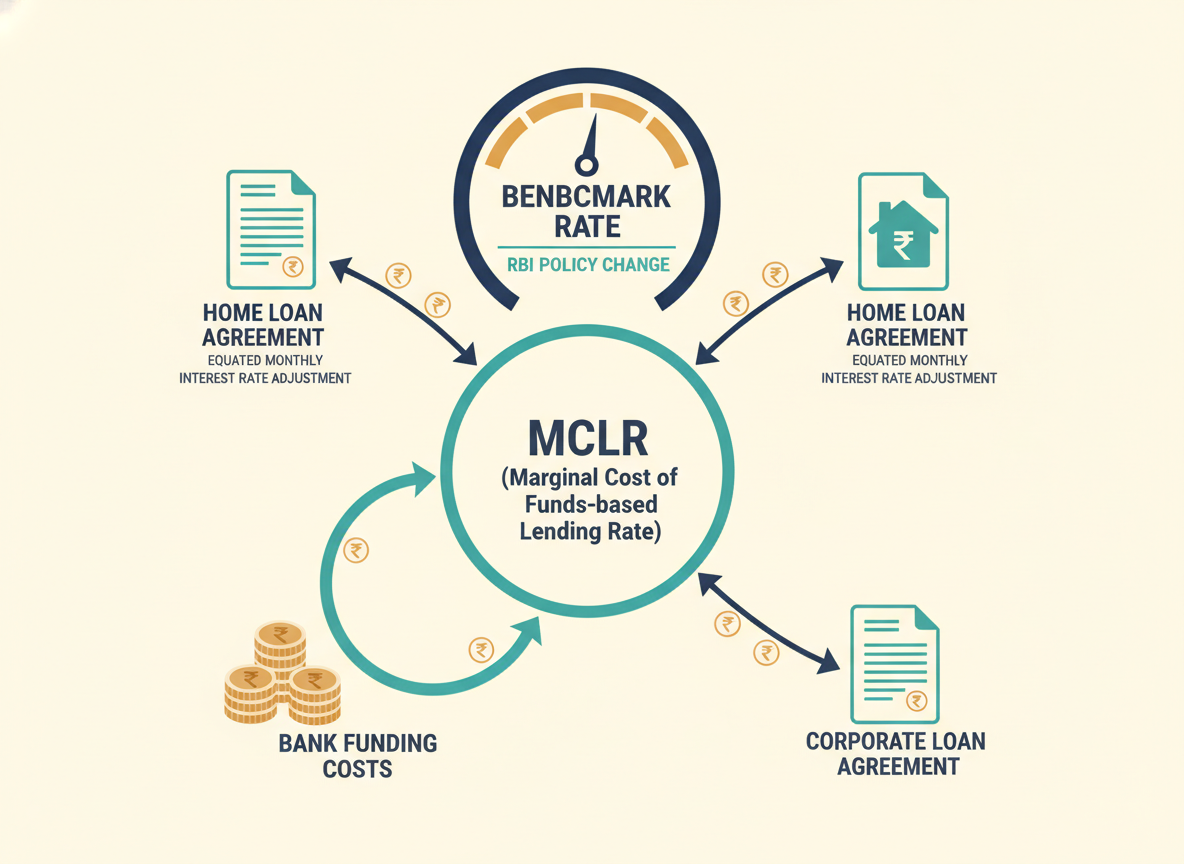
Will your home-loan EMI fall immediately?
Not necessarily. The answer depends on four details: whether your loan is actually linked to MCLR, which MCLR tenor applies, the spread charged over the benchmark, and the reset date in your agreement. A 5-bps benchmark reduction is also small in rupee terms. For illustration only, on a principal balance of ₹30 lakh, 0.05 percentage point represents roughly ₹1,500 of simple annual interest before considering amortisation and the outstanding balance; it is not an EMI quote.
Many newer floating-rate retail loans are linked to an external benchmark rather than MCLR. The RBI’s floating-rate reset FAQ explains borrower protections and reset-related communication, but your sanction letter and loan agreement remain the primary documents for your specific loan.
Who may benefit from the MCLR cut?
- Borrowers whose floating-rate loan is explicitly linked to the affected MCLR tenor.
- Borrowers whose next reset has not yet occurred, depending on the contract’s reset cycle.
- Existing customers whose applicable spread remains unchanged and whose lender passes the benchmark change through at reset.
Borrowers on fixed-rate loans, external-benchmark-linked loans, or products with different repricing rules may see no direct benefit from this particular MCLR revision.
Four checks to make before expecting savings
- Find the benchmark: Look for MCLR, repo-linked, or another benchmark in the sanction letter and latest statement.
- Confirm the tenor: Match your contract’s overnight, one-month, three-month, six-month or other reset benchmark to the published rate.
- Check the reset date: Note when the lender recalculates the interest rate and whether the EMI, tenure, or both can change.
- Ask for the revised schedule: Request the new rate, EMI/tenure impact and effective date in writing; compare them with your statement.

Should you switch or prepay because of a 5-bps cut?
A single benchmark move is not, by itself, enough to justify refinancing or prepayment. Compare the total cost of switching—including processing charges, legal or valuation fees, taxes where applicable and any foreclosure-related costs—with the expected interest saving. Keep liquidity and emergency savings in view, and ask the lender for an amortisation schedule rather than relying on a headline rate.
For background, see our guide to checking loan-app claims and our education-loan documentation guide. Those articles cover different borrowing products; do not use them as substitutes for your own HDFC Bank agreement.
Bottom line
The reported 5-bps HDFC Bank MCLR reduction is a modest benchmark change. It could help eligible MCLR-linked borrowers at the applicable reset, but it does not automatically lower every HDFC Bank borrower’s EMI. Confirm the benchmark and reset rules in your documents, then obtain the lender’s revised repayment schedule.
Sources and methodology
- Business Standard, August 10, 2026: HDFC Bank cuts MCLR by 5 bps (reported rate movement and dated table).
- HDFC Bank official rates page (live lender rate-card reference; rates can change).
- Reserve Bank of India floating-rate reset FAQ (general borrower and reset context).
Disclaimer: This article is for general education and is not financial, tax or legal advice. Rates, loan terms, eligibility, fees and reset practices can change. Verify details with HDFC Bank and a qualified adviser before borrowing, refinancing, prepaying or making any other financial decision.