

Planning to buy a car in India in 2026? The fuel decision is no longer simply petrol versus diesel. E20 petrol compatibility, rising interest in CNG, and a wider choice of electric cars are changing how buyers compare running costs, convenience and long-term value.
Recent industry coverage has highlighted growing consumer questions around the E20 transition, while electric vehicles continue to gain visibility in new-car sales. That does not make one powertrain universally best. The right choice depends on your monthly kilometres, parking, charging or gas access, route pattern and how long you plan to keep the car.
Quick answer: choose based on your daily use
- Choose E20-ready petrol if you want the widest refuelling network, occasional long trips and the simplest ownership experience.
- Choose CNG if you drive extensively in a city, have dependable access to a CNG station and want lower fuel cost per kilometre.
- Choose an EV if most charging can happen at home or work and your routine is predictable enough to plan longer journeys.
Do not compare only the price per litre or per unit of electricity. Calculate total cost of ownership, including insurance, service, tyres, home-charger installation, financing and resale expectations.
What does E20 petrol mean for car buyers?
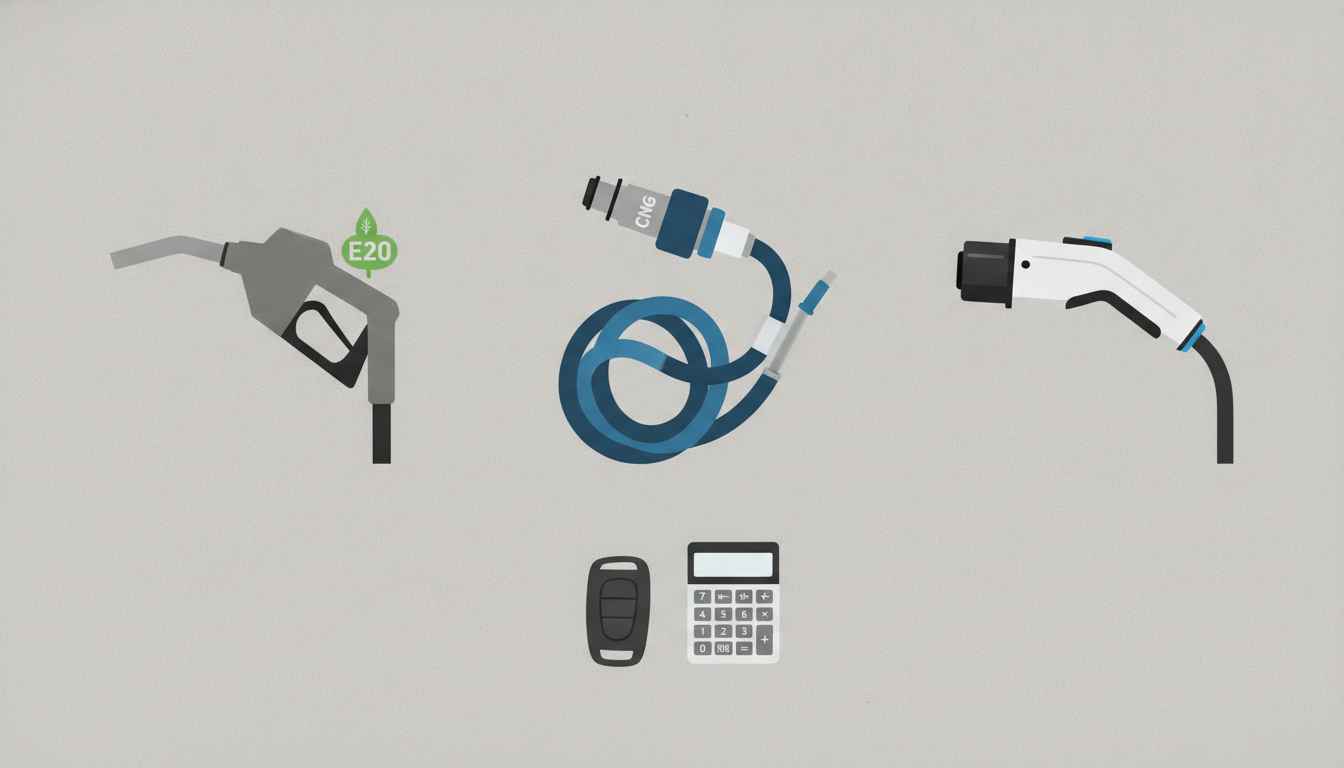
E20 is petrol blended with up to 20% ethanol. New cars sold for the transition are designed with compatibility in mind, but buyers should still check the manufacturer’s owner-manual guidance and the exact compatibility of the model and model year. Ethanol can affect fuel-system materials and fuel economy differently across vehicles, so the official specification matters more than a generic internet claim.
For a new-car buyer, an E20-ready petrol car is usually the low-friction option: familiar refuelling, no route planning and broad service support. The trade-off is that petrol running costs can be higher than CNG or an efficiently charged EV for high-mileage users.
CNG vs E20 petrol: who benefits most?
CNG can be compelling for drivers covering long urban distances, taxi users and families with a conveniently located filling station. It often delivers a lower running cost, but boot space may be reduced by the cylinder, queues can be inconvenient and availability varies sharply between cities. Performance can also feel different when the vehicle is heavily loaded or climbing.
Petrol is generally more flexible for inter-city travel and areas with limited CNG infrastructure. If you drive only a few thousand kilometres a year, the premium for a CNG variant may take longer to recover. Compare the variant price difference with your annual fuel saving before deciding.
EV vs petrol and CNG in 2026
An EV can have the lowest energy cost and smoothest city driving experience, especially when charged at home during a predictable routine. It also has fewer moving powertrain parts. However, the purchase price, public-charging dependency, battery warranty terms and highway charging time deserve careful attention.
Ask the dealer for the usable battery capacity, realistic mixed-use range, charging speeds, warranty exclusions and service costs. Owners without dedicated parking or a reliable electrical connection should be cautious: a low advertised running cost cannot compensate for daily charging friction.
A simple total-cost comparison
Start with your real monthly distance. Multiply annual kilometres by the vehicle’s observed energy consumption, then use the local petrol, CNG or electricity rate. Add scheduled service, insurance and financing. For an EV, include the charger and any electrical work; for CNG, include the purchase premium and likely boot-space compromise.
As an example, a 1,200-km monthly commuter should compare the annual saving against the higher upfront price, not against a friend’s occasional weekend usage. Use a conservative efficiency figure and leave a buffer for traffic, air-conditioning, tyre pressure and seasonal variation.
Checklist before you book your next car
- Check the model’s official E20 compatibility and recommended fuel.
- Map the nearest CNG stations or public chargers along your regular routes.
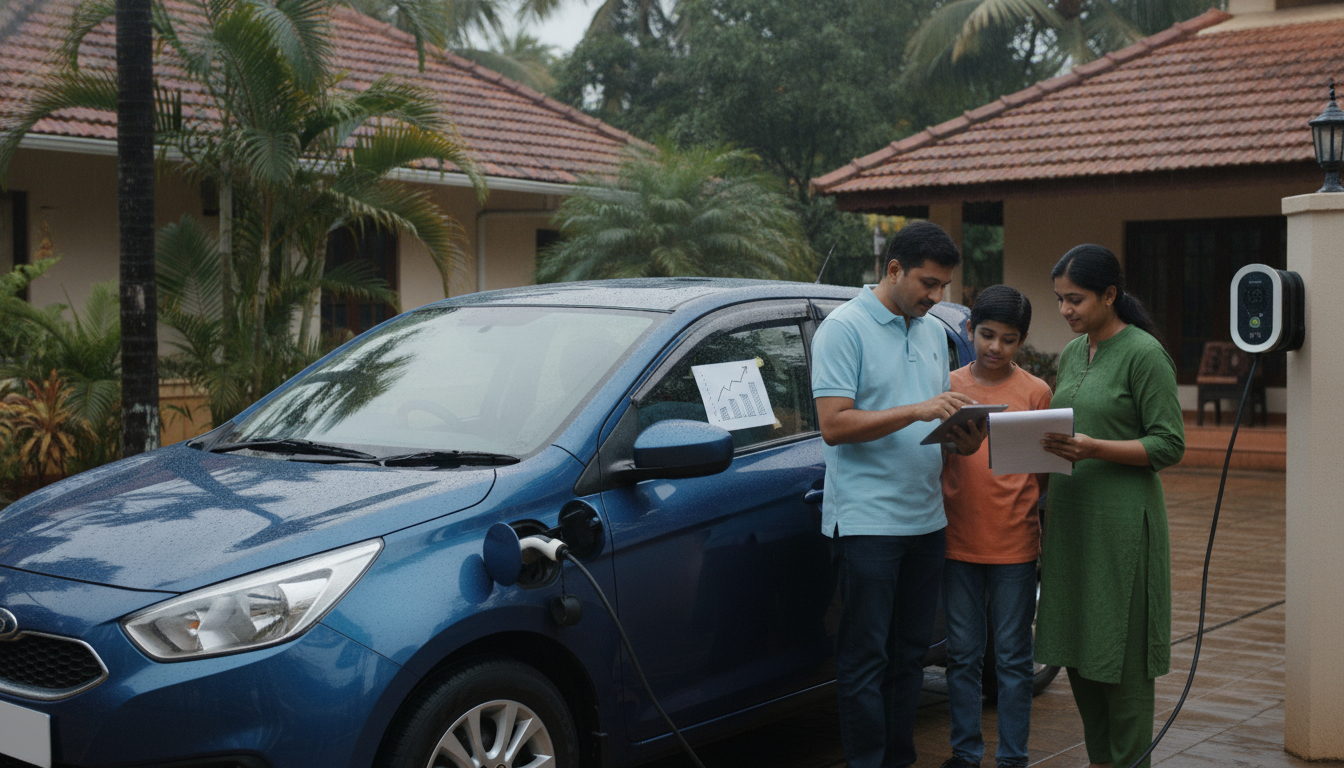
- Confirm parking, home charging permissions and electrical load if considering an EV.
- Compare insurance, service intervals, warranty and battery coverage.
- Take a test drive with the family and luggage you normally carry.
- Get an on-road quote for equivalent variants, including accessories and charger costs.
- Read the latest safety rating and do not trade essential safety equipment for a small price cut.
Our verdict
For most low-to-medium-mileage households, an E20-ready petrol car remains the easiest all-rounder in 2026. CNG is the rational high-mileage city choice when infrastructure is convenient. An EV is strongest for buyers who can charge reliably at home or work and plan to keep the vehicle long enough to benefit from lower running costs.
There is no universal winner. Match the powertrain to your routes, parking and annual kilometres, then verify every specification with the manufacturer before paying a booking amount. For more context, read our India EV buying guide for 2026 and our Delhi EV policy guide for car buyers.
Last reviewed: August 2026. Prices, fuel policy and vehicle specifications can change; confirm current details with the manufacturer and local authorities.