
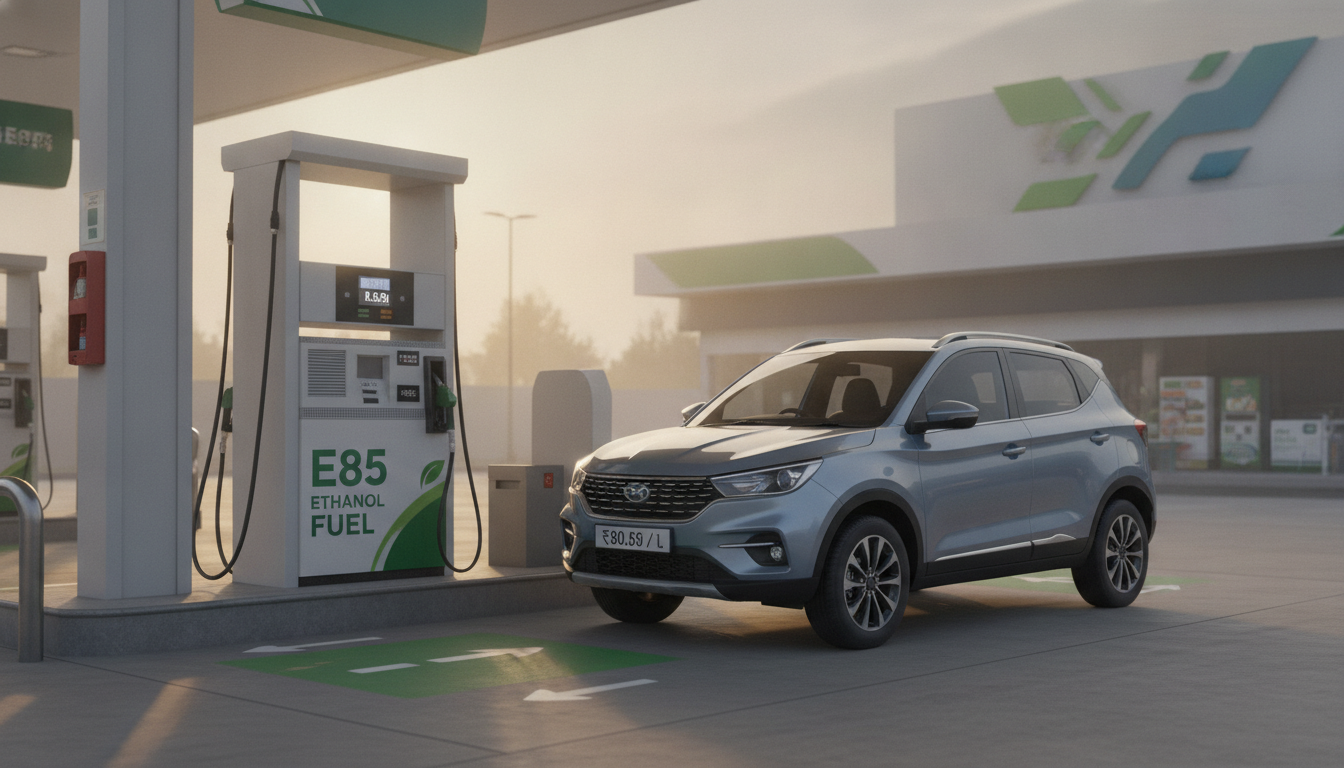

India’s fuel conversation is moving beyond petrol, diesel and CNG. The latest policy discussion around E85—fuel containing up to 85% ethanol—has created a practical question for car owners: could E85 eventually cost less at the pump, and would it actually be a sensible choice for an Indian daily driver?
The short answer is that a lower displayed price would not automatically mean lower running costs. E85 has less energy per litre than petrol, compatibility varies by vehicle, and availability is still the biggest limitation. Here is what buyers should understand before treating E85 as the next major fuel option.
Why E85 is suddenly attracting attention
E85 combines petrol with a high share of ethanol, a renewable alcohol fuel made from agricultural feedstocks. Supporters see it as a way to reduce fossil-fuel use, create demand for domestic biofuel production and give motorists another choice as India expands its ethanol-blending programme.
Recent market coverage suggests policymakers are examining ways to make higher-ethanol fuels more accessible and potentially cheaper than conventional petrol. That would be meaningful only if compatible vehicles and dependable retail supply grow at the same pace.
Could E85 be cheaper than petrol?
At the pump, E85 can have a price advantage because ethanol may be cheaper to produce or distribute under supportive policies. Taxes, regional supply, crude-oil prices and the cost of blending will decide the final retail price. A headline discount should therefore be treated as a possibility, not a guaranteed nationwide rate.
The mileage trade-off buyers must calculate
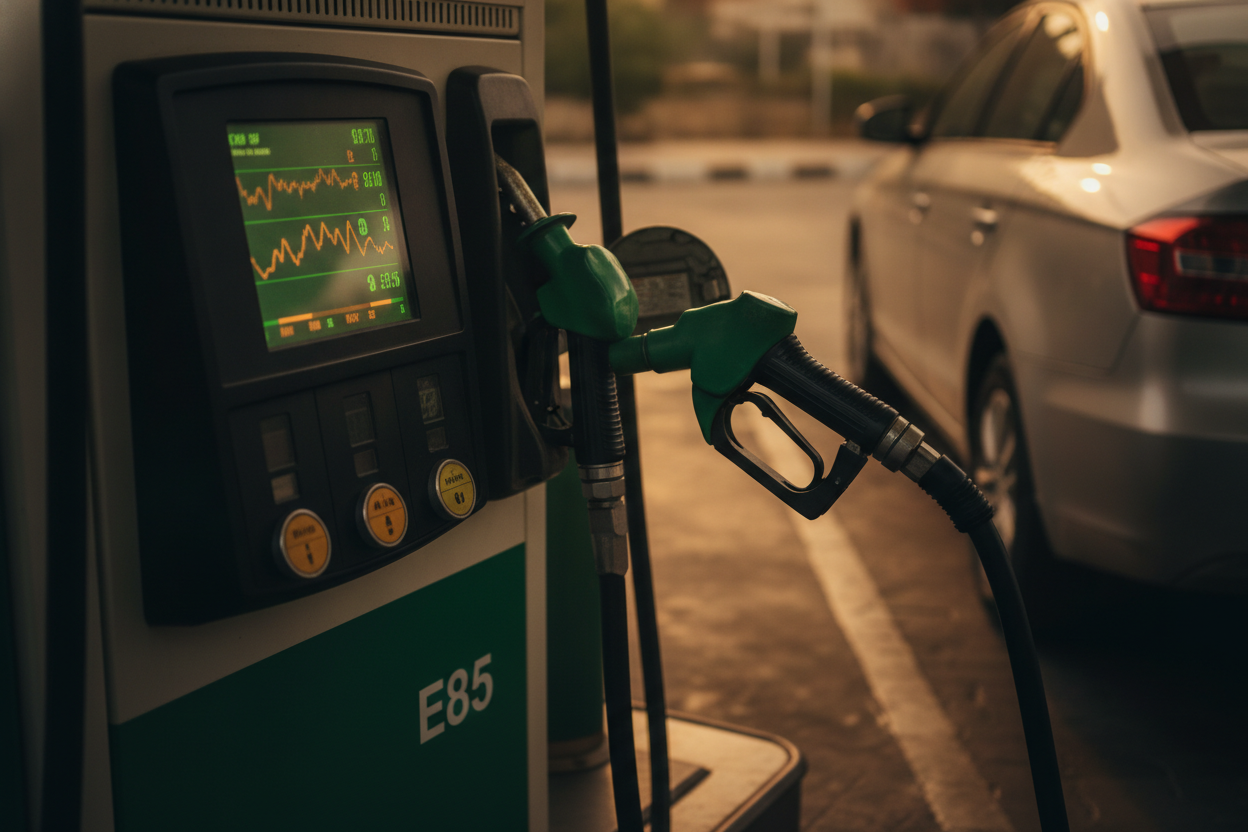
Ethanol contains less energy by volume than petrol. As a result, a compatible vehicle may travel fewer kilometres on a litre of E85. The exact change depends on engine calibration, driving conditions and the fuel blend actually dispensed, but buyers should compare cost per kilometre rather than only the price shown on the forecourt sign.
- Record your normal petrol mileage over several tanks.
- Compare the E85 price after accounting for expected mileage loss.
- Include the distance to a suitable E85 station in the calculation.
- Track cold starts, drivability and service requirements over time.
Is every petrol car ready for E85?
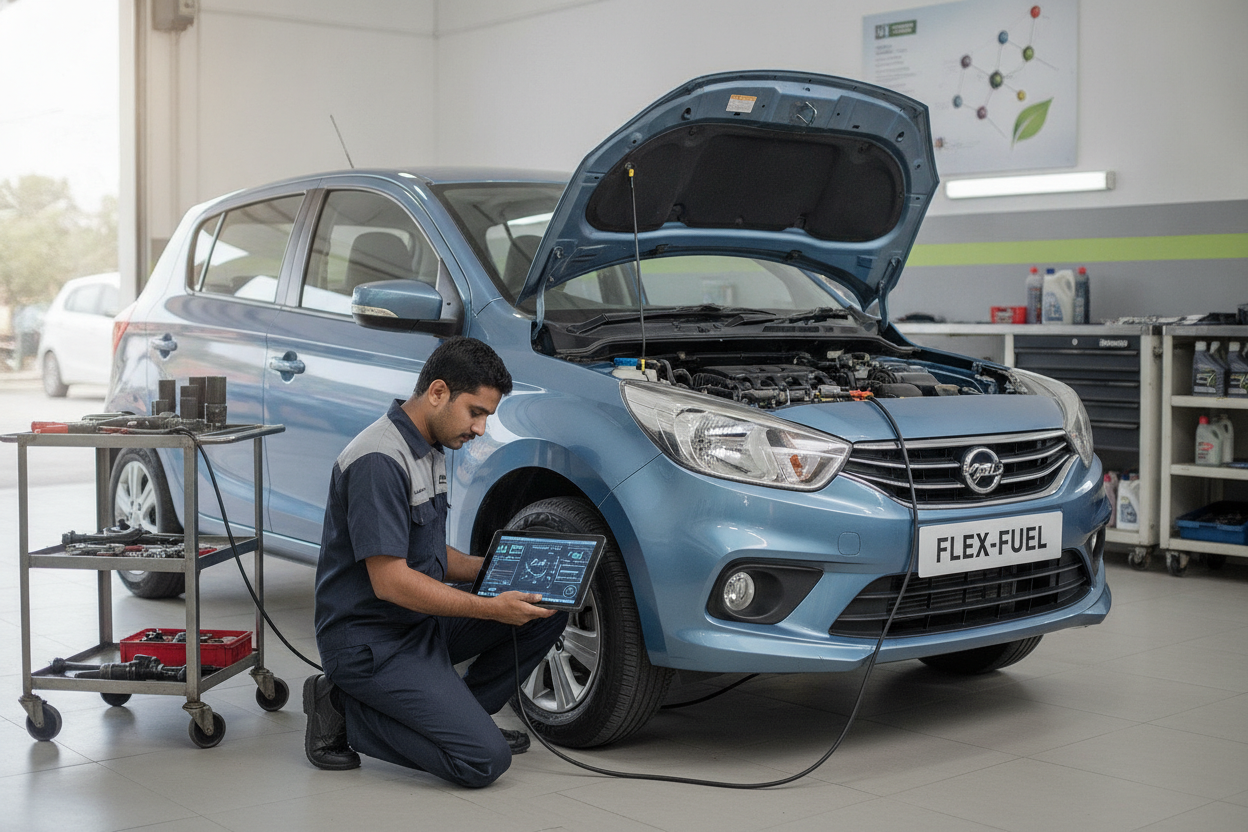
No. A petrol engine designed for ordinary blended petrol is not automatically approved for E85. Higher ethanol content can require different fuel-system materials, seals, sensors, injectors and engine calibration. It can also affect storage behaviour and moisture resistance.
Only use E85 if the manufacturer explicitly approves the fuel for your exact model and variant. Check the owner’s manual, fuel-filler label and authorised service guidance. Do not infer compatibility from the fact that the car is new, turbocharged or already approved for regular ethanol-blended petrol.
What E85 could mean for Indian car buyers
For buyers choosing a new vehicle, E85 readiness could become a useful long-term differentiator, especially for drivers with a fuel station nearby. It may also support lower carbon intensity when the ethanol supply chain is efficient. However, resale demand, service training and fuel availability will matter just as much as the engine badge.
Those comparing fuel choices should also read our Delhi EV policy buyer guide and our practical India EV buying guide before deciding whether a combustion, hybrid or electric powertrain fits their routine.
The infrastructure question is bigger than the price
A fuel is useful only when drivers can find it reliably. E85 adoption would require clearly labelled pumps, consistent blend quality, compatible storage and coverage beyond a handful of cities. Until that network develops, owners could face detours or be forced to switch between fuels without clear guidance.
E85 checklist before you buy or fill up
- Confirm written E85 approval for the exact vehicle variant.
- Find the nearest stations and check whether supply is dependable.
- Compare cost per kilometre, not only per-litre price.
- Understand warranty and servicing conditions.
- Keep records of fuel receipts, mileage and any drivability changes.
Frequently asked questions
Will E85 always be cheaper than petrol?
No. Policy, taxes, supply and crude prices will determine the retail price. Even when E85 is cheaper per litre, lower energy density can reduce or remove the saving per kilometre.
Can I use E85 in any petrol car?
No. Use it only when the manufacturer explicitly approves E85 for the exact vehicle. Approval for regular ethanol-blended petrol does not by itself mean approval for E85.
Is E85 better than an EV for every buyer?
There is no universal answer. Daily distance, charging access, fuel availability, purchase budget and ownership horizon should guide the decision rather than one fuel’s headline price.
Bottom line: E85 could become an important lower-cost and lower-fossil-fuel option in India, but the smart buyer will wait for three things to align: manufacturer approval, dependable local supply and a genuine cost-per-kilometre advantage.