
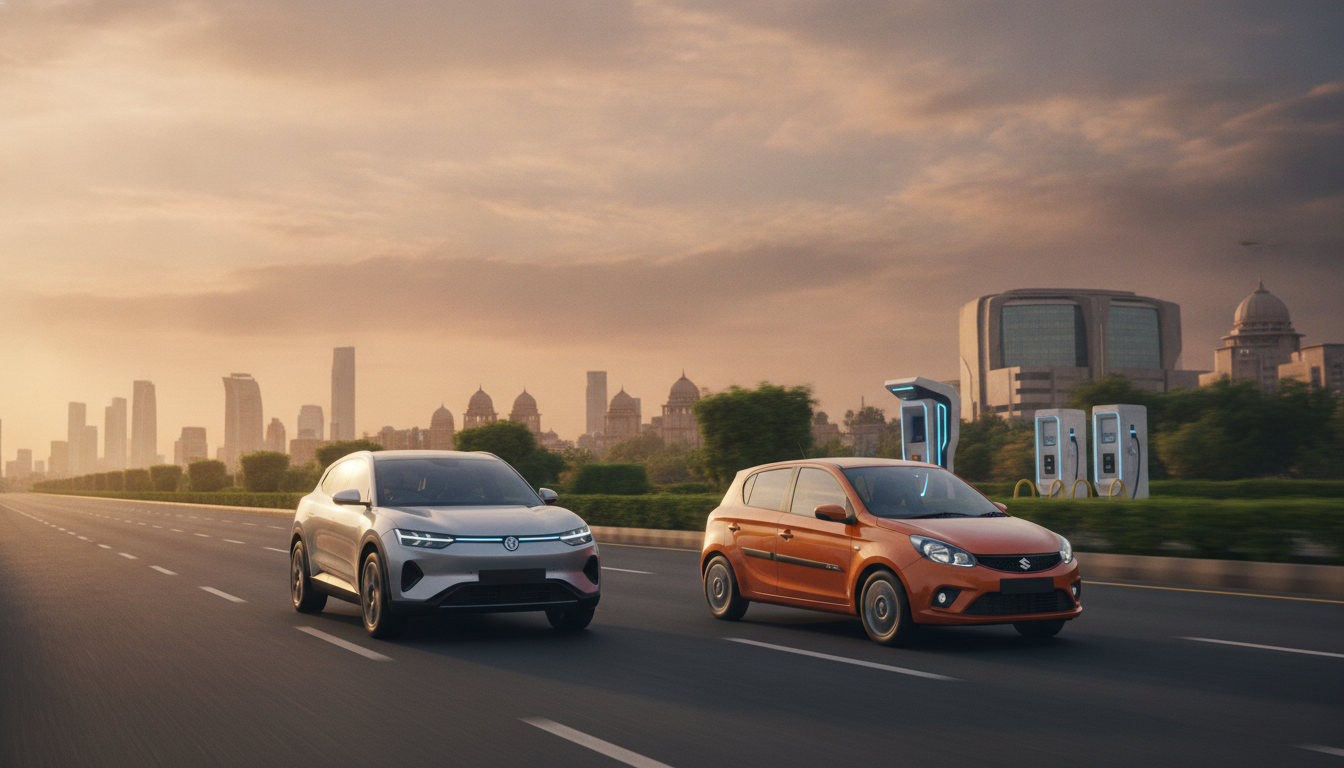

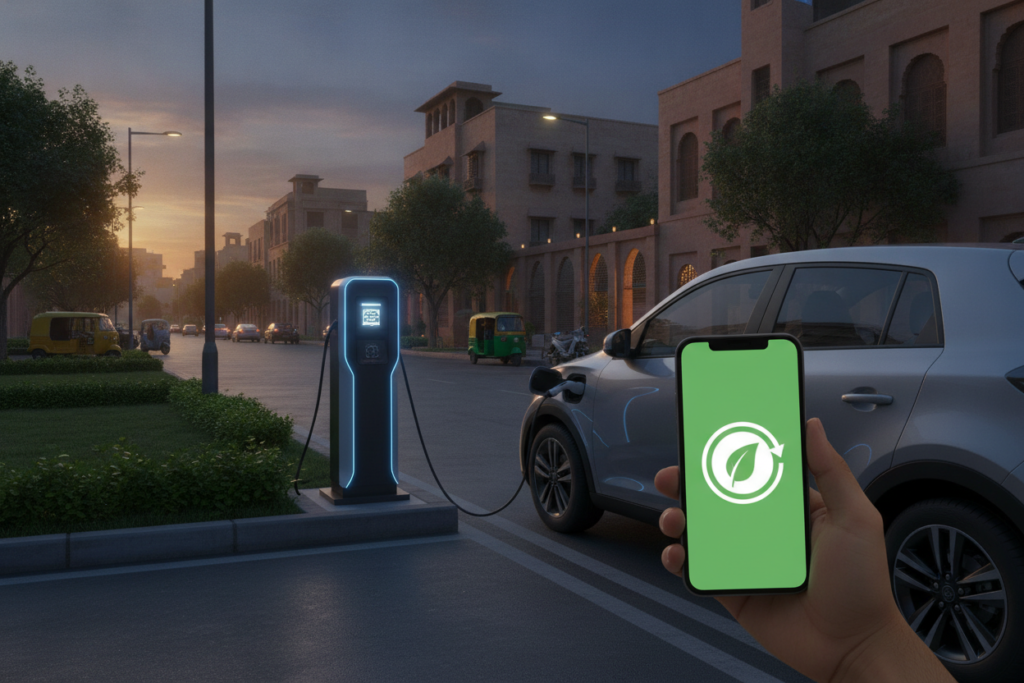
Delhi’s electric-vehicle conversation has moved from aspiration to household budgeting. The Delhi government’s 2026 policy push, including a reported ₹15,000 crore investment plan for green mobility, has put incentives, charging access and ownership costs back in focus. But a policy announcement is not the same as money credited to a buyer’s account. If you are planning to purchase a car, the smart approach is to separate confirmed measures from proposals and calculate the full on-road cost.
What is the Delhi EV Policy 2026 about?
Recent live news coverage says Delhi’s Cabinet has approved a new policy framework intended to accelerate cleaner transport. Reports point to a multi-year public investment and a system through which verified applicants may receive eligible purchase or scrappage benefits directly. Coverage has also discussed possible relief for hybrids, including a proposed road-tax waiver or reduction within an eligibility and price limit.
That distinction matters. The final notification, eligible vehicle list, price ceiling, registration rules and claim process should be treated as the source of truth. Buyers should not assume that every benefit mentioned in early reports will apply to every model or be available immediately at the dealership.
Why this matters when you are choosing a car
Delhi buyers typically compare three costs: the showroom price, the registration and insurance bill, and the monthly running cost. A policy can change the second of these quickly, while fuel savings change the third gradually. An EV may cost more upfront but use less energy per kilometre; a petrol hatchback may be cheaper to finance; a hybrid may offer lower fuel use without requiring a home charger.
For a broader buying framework covering budget, safety and powertrain trade-offs, see our guide on how to choose the right car in India in 2026.
Five checks before you count an incentive
1. Check whether the benefit is notified
Ask the dealer for the government notification number and the exact date from which the benefit is active. A news report, press statement or draft policy can be useful context, but it is not proof that the discount is claimable on the day you book. Get the benefit described in writing on the quotation.
2. Confirm vehicle eligibility
Eligibility may depend on fuel type, battery size, ex-showroom price, registration location, vehicle use and whether the car is new or transferred. A model that qualifies for a national incentive or a manufacturer discount may still fall outside a Delhi-specific rule. Check the exact variant and not merely the model name.
3. Ask who files the claim
Some benefits are adjusted during registration; others require an online application, document upload or a post-purchase claim. Clarify whether the buyer, dealer or department submits the application, how long verification takes and what happens if the application is rejected. Keep the invoice, registration certificate, identity proof and bank details consistent.
4. Compare the final on-road price
Never compare only ex-showroom prices. Put registration, insurance, accessories, extended warranty, charger installation and financing fees in one worksheet. If a road-tax benefit is proposed, request two written quotations: one with the benefit and one without it. This makes the real saving visible.
5. Test your charging reality
An EV makes the most sense when most charging happens at home, work or a dependable nearby point. Before booking, check parking permissions, electrical load, installation distance, society rules and the cost of a wall box. Public charging is a useful backup, but relying on it for every trip can change the economics and convenience calculation.
EV, hybrid or petrol: which buyer profile fits?
| Buyer situation | Usually the practical starting point | What to verify |
|---|---|---|
| Mostly city driving, fixed parking and daily running | EV | Home charging, battery warranty and service network |
| Mixed city and highway use with no reliable charger | Hybrid or efficient petrol | Final tax treatment, boot space and warranty terms |
| Lowest upfront commitment or irregular usage | Petrol hatchback | Safety equipment, real-world mileage and resale demand |
This is a framework, not a universal ranking. A lower running cost cannot compensate for an unsuitable charging routine, while a familiar petrol car may cost more to run over many years. Estimate your annual kilometres before deciding.

How to calculate the five-year cost
Use a simple ownership sheet rather than relying on a headline discount:
Five-year cost = on-road purchase price + finance interest + energy or fuel + insurance + maintenance + likely charging hardware − resale value.
For fuel, multiply annual kilometres by the car’s real-world litres-per-kilometre figure and your expected fuel price. For an EV, use your home electricity tariff for regular charging and add a separate estimate for public charging. Include tyres, periodic servicing and insurance renewal. Run the calculation again with a conservative resale value; fast-changing battery and software technology can affect used-EV prices differently from petrol cars.
What to ask the dealer in writing
- Is the Delhi policy benefit active for this exact variant today?
- Is the amount a government benefit, a manufacturer discount or both?
- Is the benefit deducted from the invoice or claimed later?
- Who owns the risk if the claim is delayed or rejected?
- What charger, installation and electrical-upgrade costs are excluded?
- What are the battery, motor and roadside-assistance warranty terms?
Bottom line for Delhi car buyers
The 2026 policy push is a strong signal that Delhi wants cleaner mobility and better EV adoption. It may improve the purchase equation, but the best decision still depends on the final notification, your parking and charging setup, annual driving distance and the complete on-road quotation. Treat early announcements as a reason to investigate—not as a guaranteed discount.
Before you sign, compare at least one EV, one hybrid or efficient petrol alternative, and one safe conventional car in the same total budget. For personal-finance context on managing digital payments and household costs, you can also read our explainer on UPI charges and MDR in India.