

Short answer: No, ordinary users are not being charged for UPI payments at the time of publishing this update. The current discussion is about whether a future framework could allow a Merchant Discount Rate (MDR) on some UPI transactions—and, if that happens, who would pay it. That is very different from a confirmed fee on every payment.
UPI has become the default way to pay for everything from tea to utility bills. So it is understandable that headlines about “UPI charges” create confusion. In this guide, we separate what is confirmed from what is being discussed, explain MDR in simple language, and share the practical steps users and merchants should take.
What is the latest UPI charges update?
Live news reports in August 2026 say policymakers are examining changes that could create a route for MDR on UPI transactions. Reports also quote the RBI Governor saying it is too early to decide who would bear any cost. The important takeaway is simple: UPI remains free for consumers under the current arrangement, and no universal user fee has been announced.
A proposed amendment or policy discussion is not the same as an implemented rule. Before any charge becomes applicable, the final law, RBI directions, payment-network rules, and app or bank communication would need to make the terms clear.
MDR on UPI explained in simple terms
MDR means Merchant Discount Rate. It is a small fee associated with processing a digital payment. In card payments, the fee is commonly distributed among parties such as the payment network, issuing bank, acquiring bank, and payment processor. If an MDR model is introduced for a particular UPI segment, it would be a transaction-processing cost—not automatically a fee that every customer must pay.
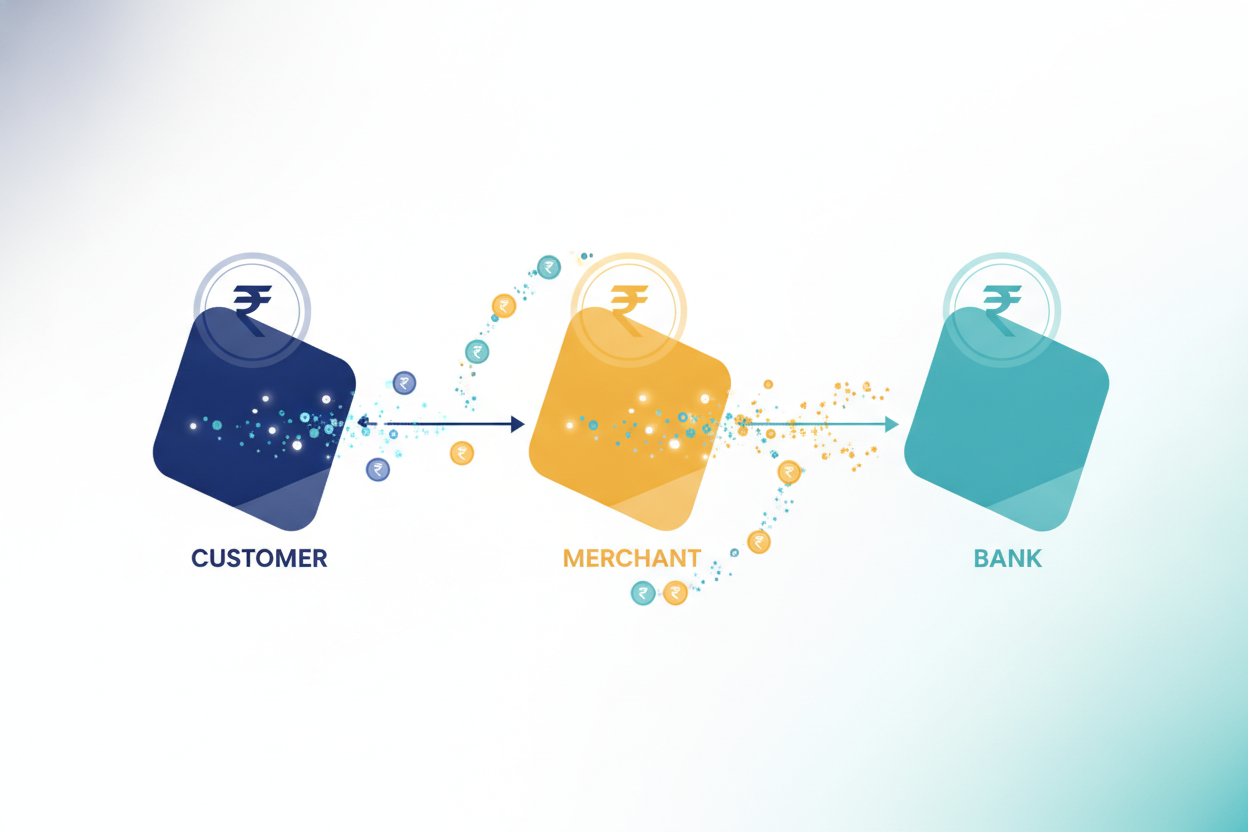
Will Google Pay, PhonePe or Paytm charge users?
There is no confirmed announcement that users will have to pay a fee for normal UPI payments. Avoid forwards claiming that a fixed amount will be deducted from every scan-and-pay transaction. A genuine change would be communicated through official app notices, bank messages, RBI or NPCI updates, and clearly displayed terms.
Even if a future MDR arrangement is permitted, the impact could differ by transaction type. Person-to-person transfers, small merchant payments, large online purchases, credit-card-linked UPI payments, and other categories may not be treated identically. The final rules matter more than social-media summaries.
Why is MDR being discussed?
UPI processes a very large number of low-value payments. Payment apps, banks, and infrastructure providers still incur costs for technology, fraud prevention, customer support, and settlement. The current zero-MDR structure supports adoption, but the industry continues to debate how the ecosystem should be funded sustainably.
That debate has two sides. A carefully designed model could help maintain reliable payment infrastructure. On the other hand, passing costs to small merchants or consumers could reduce digital-payment adoption. Any final framework will need transparent pricing, strong competition, and safeguards for low-value transactions.
What should UPI users do right now?
- Continue using UPI normally; do not pay a fee based only on an unverified message.
- Check the payment confirmation screen before entering your UPI PIN.
- Remember that a UPI PIN is used to send money, not to receive a refund.
- Never share your PIN, OTP, card details, or screen-control access with anyone.
- For a disputed payment, report it quickly inside your bank or payment app and keep the transaction ID.
What should small merchants watch for?
Merchants should compare the total cost of each payment method rather than reacting to a headline. Keep settlement records, check whether a fee is shown before accepting a transaction, and use only authorised QR codes and payment accounts. Do not add a “UPI charge” to customers unless a clearly applicable rule and your acquiring partner’s terms allow it.
UPI charges: frequently asked questions
Is UPI free in India right now?
For ordinary consumer UPI payments, there is no universal fee announced at the time of writing. Always check the final amount shown by your bank or app.
What does MDR stand for?
MDR stands for Merchant Discount Rate, a processing fee associated with some digital payment models. It does not automatically mean a customer fee.
Can a payment app deduct money without permission?
A legitimate charge should be disclosed through the applicable terms and payment flow. If an unexpected debit appears, contact your bank and app support immediately and preserve the transaction details.
Bottom line
The current UPI-charge story is about a possible future payment-economics change, not a confirmed blanket fee for users. Treat “UPI will stop being free tomorrow” posts with caution, rely on official updates, and keep following the final rules as they are published. For more practical finance explainers, see our guides on how to check a digital loan app before borrowing and understanding loan-app costs and eligibility.
Editorial note: This article is informational, based on live search reporting available on 8 August 2026. Policy proposals and payment rules can change; verify details with your bank, NPCI and RBI before making a financial decision.