
Short answer: If you want a three-row SUV and are deciding between an EV and a petrol-backed powertrain, the upcoming MG Hector Hawk is worth watching before you sign a deal. JSW MG Motor India has confirmed an August 26, 2026 launch date, but its final price, variants and India-spec equipment still need to be announced.
That distinction matters. Search results currently mix confirmed launch information with expected figures, so this guide separates what is known from what is only a forecast—and explains which buyer should wait.
What is confirmed about the MG Hector Hawk?
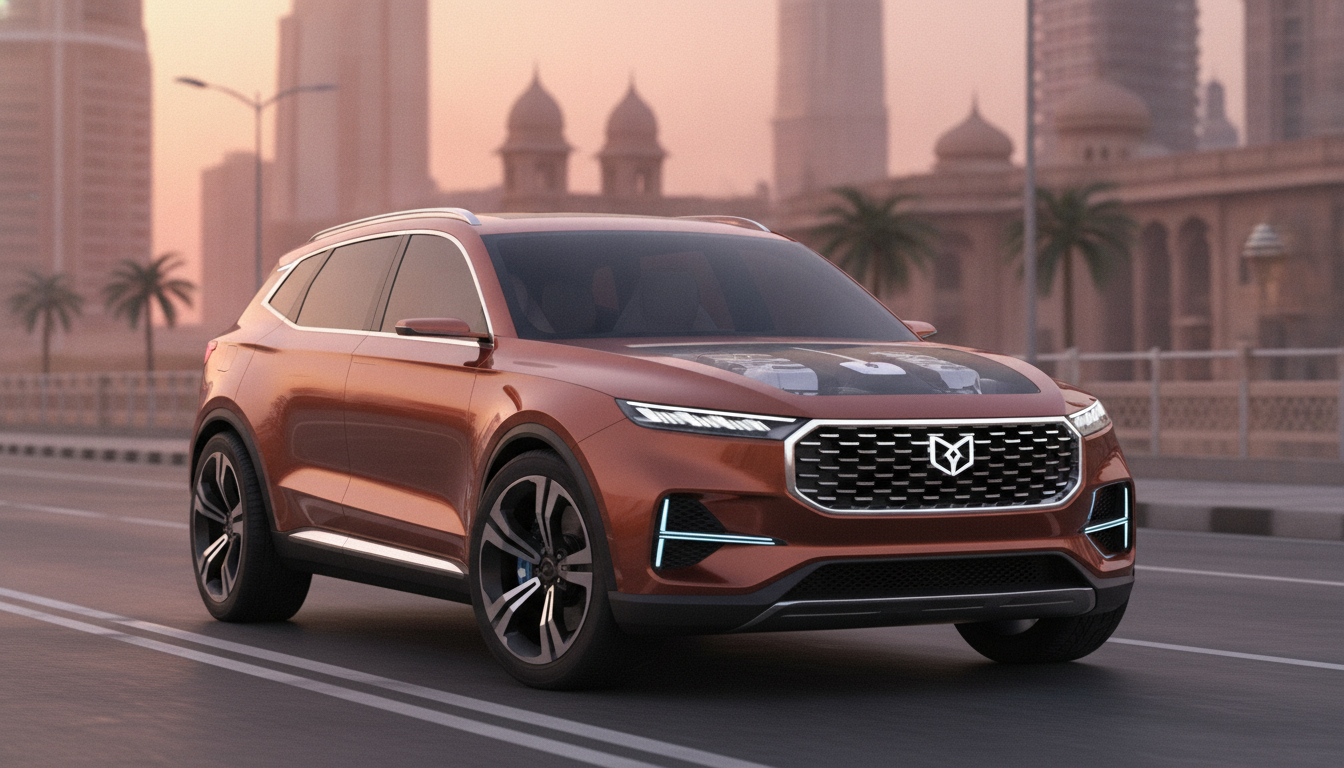
The Hector Hawk is expected to be a new three-row, seven-seat SUV positioned above the regular Hector. The confirmed launch date is August 26, 2026. Reports describe two powertrain choices under the same name: a battery-electric version and a plug-in hybrid (PHEV).
The underlying product is widely reported to be related to the Wuling Starlight 560. That gives us a useful reference point, but it is not a substitute for final India-spec certification. Treat the following as indicative until MG publishes the official brochure:
- EV battery: reported 69.2 kWh
- EV output: reported 204 PS and 310 Nm
- Expected EV range: around 530 km, subject to certification and test conditions
- PHEV battery: reported 20.5 kWh with a 1.5-litre petrol engine
- Expected electric-only PHEV range: around 125 km
The SUV is expected to measure roughly 4.7 metres long, with a large central touchscreen, a separate driver display, three rows and modern driver-assistance features. However, exact dimensions, boot space, charging speeds, safety rating and variant-wise features remain unconfirmed.
Why the EV-versus-PHEV choice is the real story
Most launch coverage stops at the headline range number. The more useful question is where you drive. An EV can be the simpler and cheaper daily option if you can charge at home or work. A PHEV can suit households that need frequent highway flexibility but still want to complete routine trips using electric power.
Choose the Hector Hawk EV if…
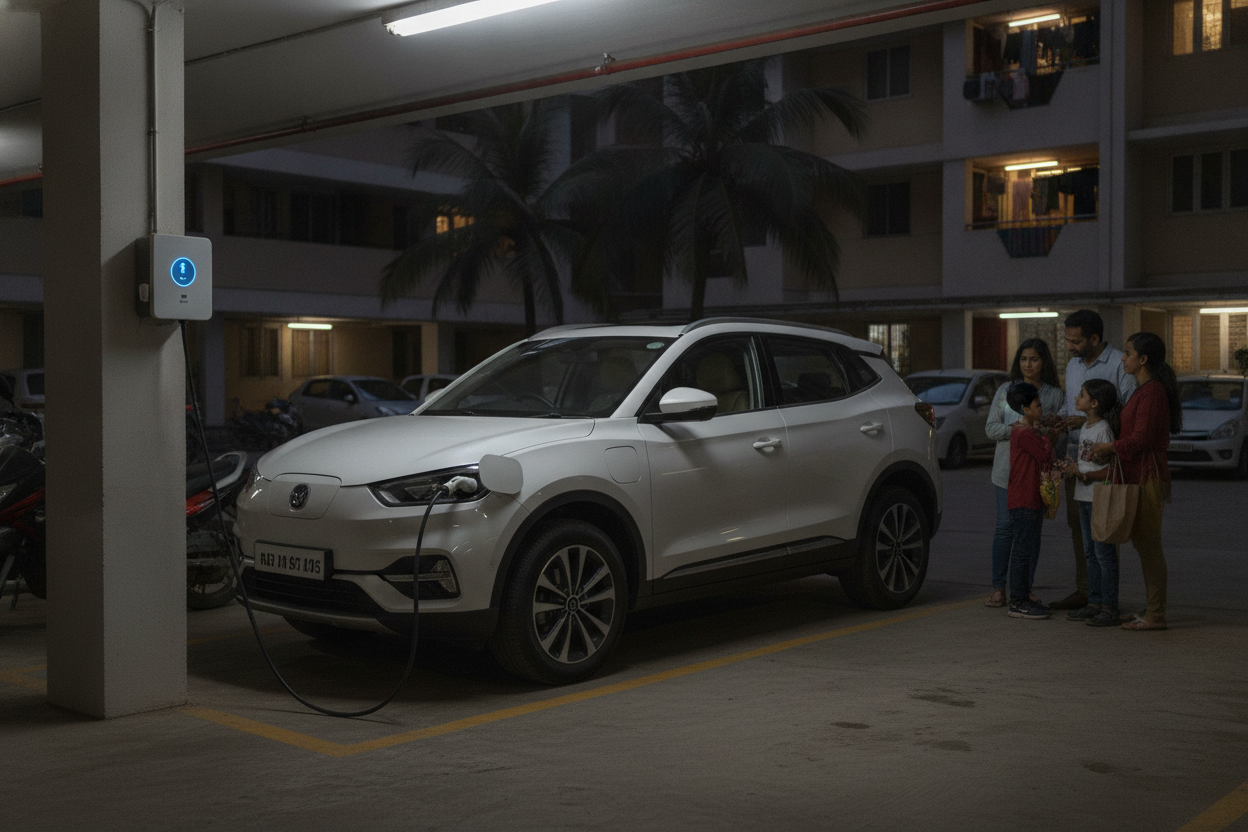
- Your daily running is predictable and a home or workplace charger is practical.
- You want quiet, low-maintenance city driving and can plan longer trips around fast chargers.
- You are comfortable checking the final warranty, battery coverage and charging network before booking.
Choose the PHEV if…
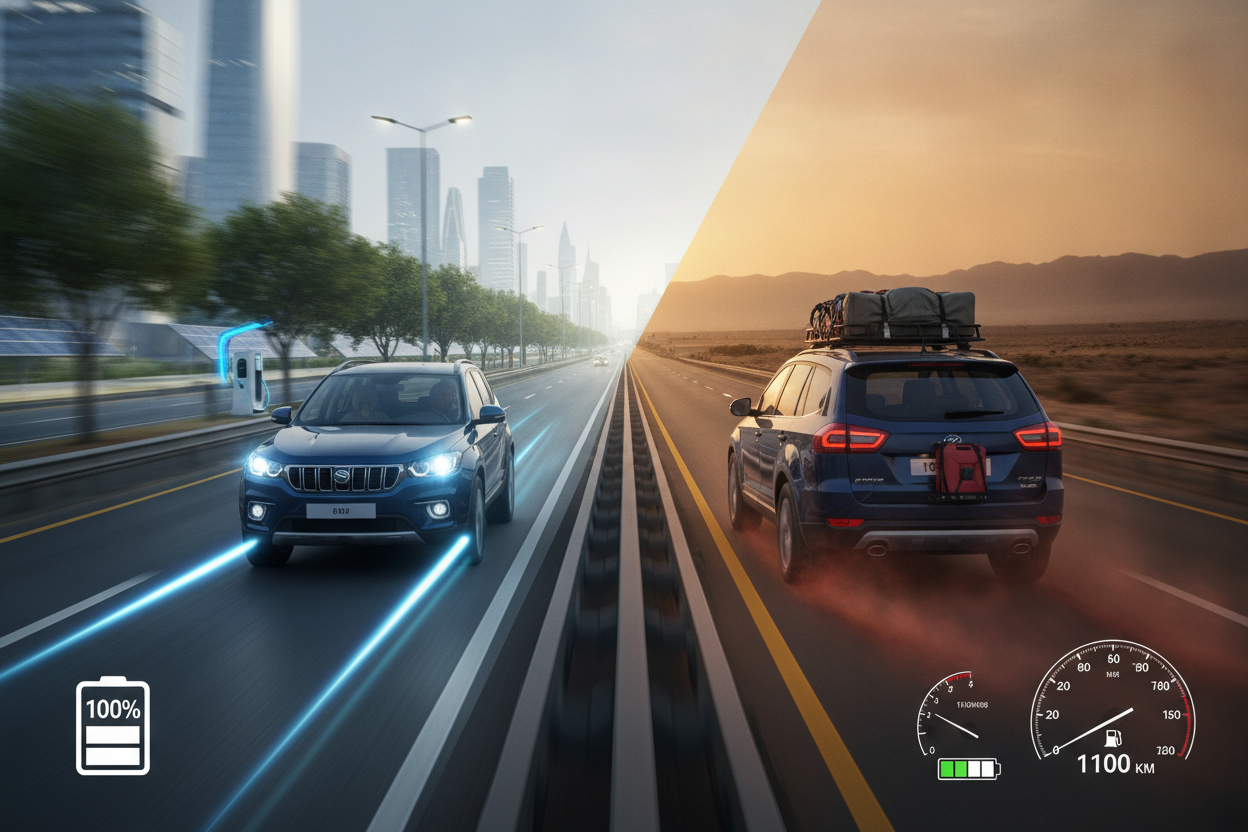
- Your regular commute is short, but you make long inter-city drives often.
- You do not have dependable charging at every destination.
- You understand that a PHEV is most efficient when charged regularly—not driven like a conventional petrol SUV.
Expected price and likely rivals
Current reports point to an entry price near ₹18 lakh ex-showroom, while some market listings show an estimate closer to ₹20 lakh. Neither is official. The final number will decide whether the Hawk is a genuine value alternative or simply a larger premium purchase.
Likely comparison points include the Mahindra XEV 9S, Mahindra XEV 9E and Tata Harrier EV. The regular MG Hector, Mahindra XUV700 and Tata Safari will also remain relevant for buyers who want a familiar petrol or diesel ownership case. A PHEV option could give MG a distinct position, but only if pricing and real-world electric range are competitive.
What buyers should verify on launch day
- Certified range and charging: Check battery size, AC/DC charging times, connector type and whether a home charger is included.
- Battery and vehicle warranty: Look for years, kilometres, degradation terms and roadside assistance coverage.
- Seating practicality: Test the third-row knee room, access, air vents and luggage space with all seven seats occupied.
- Safety equipment: Confirm the exact ADAS functions, camera coverage, airbags, electronic stability control and crash-test status.
- Ownership cost: Compare insurance, service intervals, financing, home electrical work and the price difference between EV and PHEV variants.
Should you wait for the MG Hector Hawk?
Wait if you need a seven-seater, your purchase can move after August 26, and you are open to choosing between electric and plug-in hybrid ownership. The launch could add a useful middle path to India’s SUV market.
Buy now if your existing vehicle is unsafe, you need a predictable delivery date, or your location lacks charging support. A confirmed, available car is often better than an attractive estimated specification.
For a broader framework before visiting a showroom, read our 2026 India car-buying guide. Delhi readers can also compare the policy and incentive considerations in our Delhi EV Policy 2026 explainer.
Bottom line
The MG Hector Hawk is timely because it may combine three-row practicality with two very different electrified powertrains. But today’s range and price figures are expectations, not purchase guarantees. Use August 26 to check the official specification sheet, then compare the total ownership cost—not just the launch headline—against the XEV 9S, Harrier EV, XUV700 and Safari.
Research note: This article was prepared using current August 2026 search results and competitor coverage. Expected specifications are labelled as such and should be rechecked against MG’s official announcement.