The automotive world is buzzing with the rumor that simply refuses to die: the iconic “people’s car” is making a comeback. The Tata Nano 2026 is reportedly set to debut with a complete makeover, and if whispers from the industry are to be believed, it will address the two biggest pain points of the original model—performance and efficiency. According to leaks and speculative reports, the new Tata Nano 2026 will feature a revamped 800cc engine and a class-leading fuel-efficient mileage of 30km/l.
While Tata Motors has officially discontinued the Nano years ago due to safety regulations and marketing challenges, the demand for an affordable, fuel-efficient hatchback has never been higher in price-sensitive markets like India . Here is everything we expect from the possible return of the Tata Nano in 2026.
The Legend of the “People’s Car”
To understand the hype around the Tata Nano 2026, we must look back. Launched in 2009 with an astonishing starting price of around ₹1 lakh, the original Tata Nano was dreamed up by Ratan Tata to get Indian families off two-wheelers and into safe, all-weather four-wheelers . However, the original 624cc, two-cylinder engine, while economical, was criticized for being underpowered, and the car’s marketing as the “cheapest” car in the world hurt its status-conscious buyer base .
Fast forward to 2026, and the landscape has changed. With the exit of many small diesel cars and rising fuel prices, a revived Tata Nano 2026 could fill the void left by the Alto 800 and Renault Kwid in the entry-level segment.
Powertrain: The Revamped 800cc Engine
The most significant upgrade for the Tata Nano 2026 revolves under the hood. The original 624cc engine, which produced about 38 bhp, often felt strained on highways. Rumors suggest that Tata will finally introduce a revamped 800cc engine for the new Nano .
- Displacement: Expected to be around 796cc to 800cc.
- Cylinder Configuration: While the original used a 2-cylinder setup, there is speculation that the new 800cc engine might feature a smoother 3-cylinder layout to reduce vibration—a common complaint in the older model. However, some reports indicate it might be a more powerful evolution of the 2-cylinder unit, given the cost constraints .
- Power Output: Likely to be tuned for city driving, with power figures expected to hover around 45-48 bhp. This would be a substantial improvement over the old model, allowing for better drivability in stop-and-go traffic and higher confidence on highways.
- Fuel Type: Like its predecessor, the 2026 model will likely be petrol-only, with a factory-fitted CNG option potentially in the pipeline to capitalize on the growing demand for alternative fuels .
Segment-Best Fuel Efficiency: 30 km/l Mileage
If the engine upgrade is the muscle, the mileage is the heart of the Tata Nano 2026 appeal. In an era where fuel prices remain volatile, the claim of 30km/l mileage is a game-changer.
The original Nano was already a frugal car, returning around 22-25 km/l in real-world conditions . With the new 800cc engine, improved engine mapping, and a lighter chassis, Tata engineers are reportedly targeting an ARAI-certified figure of 30 km/l. For the base variants without air conditioning, this figure could potentially stretch even higher, making it the most fuel-efficient petrol car in its class.
This focus on fuel-efficient mileage positions the Tata Nano 2026 as the perfect solution for daily commuters and first-time car buyers who prioritize low running costs above all else.
Design and Features: A Modern Makeover
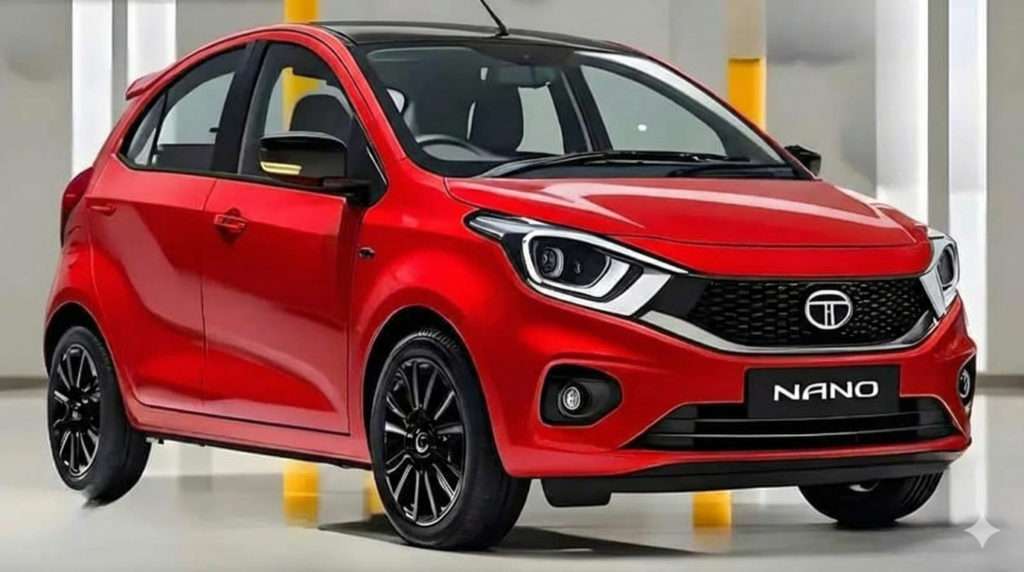
Gone will be the jelly-bean look that defined the first-generation Nano. The Tata Nano 2026 is expected to borrow design cues from Tata’s successful “Impact Design” philosophy, seen in the Tiago and Altroz.
Exterior Expectations
- Front Profile: A revised front grille with a more aggressive look, possibly featuring a gloss black finish.
- Lighting: Sleeker headlamps (halogen projectors) and the inclusion of DRLs (Daytime Running Lamps) to meet modern safety standards.
- Aerodynamics: A slightly wider stance for better stability, with improved aerodynamics to aid the 30km/l mileage claim.
Interior and Safety
Safety was the Achilles’ heel of the original Nano, failing crash tests that led to its discontinuation . For the 2026 debut, Tata Motors cannot afford to skip safety features.
- Safety Features: Dual airbags, ABS with EBD, rear parking sensors, and a stronger reinforced body structure are expected to be standard across variants to comply with current crash test norms .
- Cabin: A redesigned dashboard with a 7-inch touchscreen infotainment system (supporting Android Auto and Apple CarPlay), better fabric quality, and improved ergonomics.
- Seating: Retaining the spacious 4-seater cabin that made the original famous for its interior space despite the compact exterior.
Tata Nano 2026 Price in India
The big question remains: How much will it cost? The magic of the original Nano was its price. For the 2026 model, while it cannot be as cheap as the original due to mandatory safety and emission equipment, Tata is expected to price it aggressively.
Estimated Tata Nano 2026 price in India is speculated to start around ₹2.99 lakh (ex-showroom) and go up to ₹4.5 lakh for the top-end CNG variant. This would position it just below the Tata Tiago, creating a clear entry point for buyers migrating from scooters to cars.
Rivalry and Market Positioning
If launched, the Tata Nano 2026 will not have an easy road. The segment has evolved. It will compete with:
- Renault Kwid: Known for its SUV-like stance.
- Maruti Suzuki Alto K10: The king of the entry-level segment with a strong service network.
- Datsun redi-GO: Though its future is uncertain, it remains a budget option.
However, the Nano holds a unique trump card: Emotion. The brand recall of the Nano is immense. If Tata can rebrand it from the “world’s cheapest car” to the “world’s smartest budget car,” the Tata Nano 2026 could succeed where the original failed .
Should You Wait for the 2026 Nano?
If you are a first-time buyer or looking for a second car for city commutes with stellar fuel-efficient mileage, the Tata Nano 2026 might be worth the wait. However, it is important to temper expectations. As of early 2026, Tata Motors has not released an official statement confirming the production of a new Nano. Most news outlets suggest that the company is focused on SUVs and EVs .
Yet, with the Indian market showing a renewed interest in affordable mobility and the success of compact SUVs, the time might finally be right for the “People’s Car 2.0.”