


Important update: The Reserve Bank of India (RBI) has proposed a new framework for how regulated lenders determine and disclose loan interest rates. These are draft guidelines, not current law. Public comments are invited until 11 September 2026, and the final framework is proposed to take effect from 1 April 2027.
For borrowers, the proposal matters because it would make loan pricing easier to track: regulated entities would declare lending rates monthly, floating-rate loans would be reset at least once every three months, and lenders would have to put a ceiling on the annual percentage rate (including interest and other charges) for microfinance and small-value loans.
What has the RBI proposed?
- Monthly rate disclosure: Regulated entities would declare their lending rate on the first day of every month. Certain banks with more than ₹1,000 crore in deposits would publish their internal benchmark on the first calendar day of each month.
- Quarterly floating-loan resets: Floating-rate loans would be reset at least once in three months. For agricultural loans, the reset period would follow the crop season but cannot exceed 12 months.
- External benchmarks: Floating-rate personal loans and floating-rate loans to MSMEs from commercial banks would remain linked to an external benchmark under the draft.
- Spread stability: Components of the spread other than the credit-risk premium would not be revised before three years for a floating-rate loan, subject to the framework’s proposed conditions. A credit-risk premium could change when the borrower’s credit profile changes and after a review.
- Small-loan charge ceiling: Lenders would need to explicitly set a ceiling on the annual percentage rate, including interest and fees, for microfinance and small-value loans and ensure the charges are not usurious. The draft includes personal loans with principal up to ₹50,000 in small-value loans.
What could this mean for personal-loan and MSME borrowers?
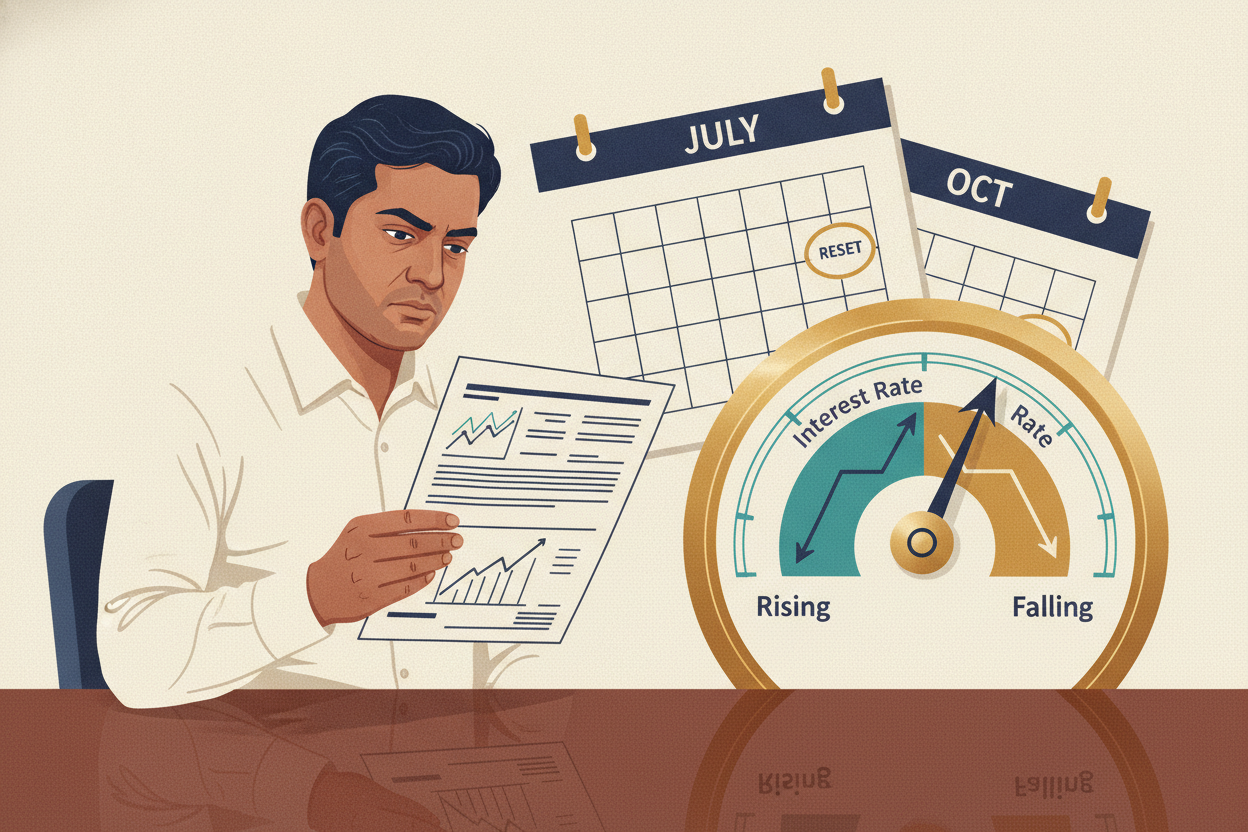
The proposal is primarily about transparency and consistency. A monthly disclosure could make it simpler to compare a lender’s published rate with the rate used for a new or existing loan. A reset at least once every three months could also make changes in an external benchmark pass through more regularly—up or down—rather than being delayed by a longer reset interval.
However, a quarterly reset does not guarantee a lower EMI or a lower interest rate. Your actual cost can still depend on the benchmark, the lender’s permitted spread, credit-risk assessment, fees, outstanding balance, tenure and the loan agreement. The draft does not announce a universal lending rate or a fixed saving for every borrower.
The spread is as important as the benchmark
The draft describes the spread as potentially including a credit-risk premium and other components such as operating cost, term premium and business-strategy considerations. This is why two borrowers with loans linked to the same benchmark may not pay the same effective rate. Borrowers should look beyond the benchmark and ask the lender to identify the spread components, reset date and conditions for any change.
A practical checklist for borrowers

- Ask whether the loan is fixed, floating or hybrid, and identify the benchmark.
- Record the current spread, its components, the reset frequency and the next reset date.
- Request the annual percentage rate and a complete list of fees, especially for small-value or microfinance borrowing.
- Check whether a rate change will alter the EMI, the tenure, or both under your agreement.
- Keep the sanction letter, key fact statement, repayment schedule and lender communications together.
- Do not refinance solely because a headline rate has changed; compare total remaining interest, fees, foreclosure terms and your ability to repay.
Draft rules are not effective yet
The RBI’s proposal is subject to the consultation process. The reported deadline for public comments is 11 September 2026, while the proposed effective date for final guidelines is 1 April 2027. Until final rules are issued and implemented, borrowers should rely on the terms in their existing loan documents and official communication from their lender.
Sources and methodology
This explainer is based on The Economic Times’ report published 13 August 2026, which summarises the RBI draft and quotes its proposed provisions. Readers should check the RBI’s official website for the consultation document, final directions and updates. This article was reviewed for draft-status wording and does not treat media reporting as a substitute for the final RBI notification.
Disclaimer: This article is for general information and education, not personal financial, tax or legal advice. Loan costs and eligibility vary by lender and borrower. Read your loan documents and consult a qualified professional before making a borrowing, refinancing or repayment decision.