

Buying a car in India in 2026 is no longer just a choice between a hatchback, sedan or SUV. Buyers now have more powertrains, more safety technology and more ownership-cost variables to compare. The right decision depends on how you drive, where you live and what you can comfortably spend after the showroom excitement fades.
Start with your real on-road budget
Begin with the on-road price, not the ex-showroom number. Add registration and road tax, insurance, accessories, an extended warranty, financing charges and—if you are considering an EV—a home charging installation. Keep your emergency fund intact and choose an EMI that remains comfortable even when fuel, maintenance or family expenses rise.
- Set a maximum on-road budget before visiting a dealership.
- Compare loan offers by total interest, not only by monthly EMI.
- Request separate quotes for insurance and accessories.
- Keep a reserve for tyres, servicing and unexpected repairs.
Match the car to your everyday use
Write down your typical week. A short urban commute, frequent highway trips and a large family each point to different strengths. Check rear-seat comfort, boot space, ground clearance and visibility with the people who will actually travel in the car. Do not pay for features that do not solve a real problem in your routine.
Petrol, diesel, CNG, hybrid or EV?
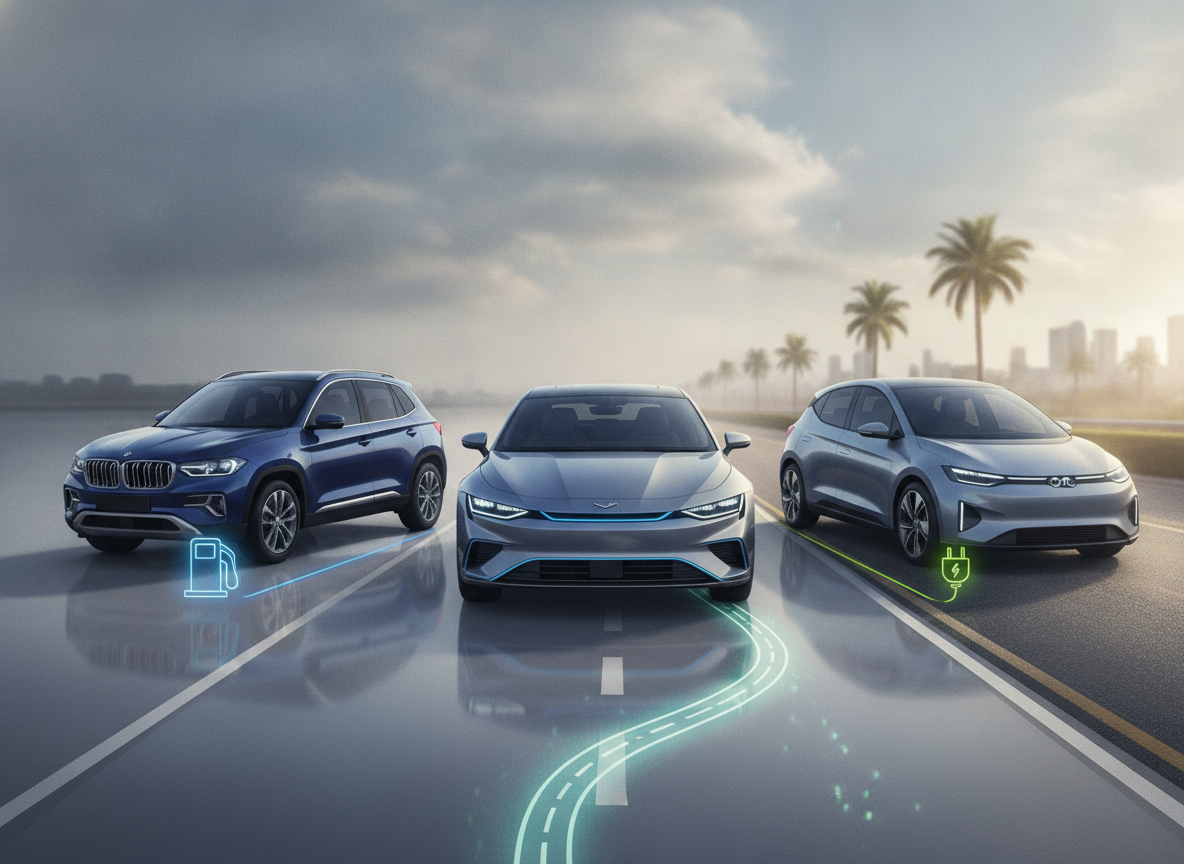
There is no universally best powertrain. Petrol remains a straightforward choice for mixed use and lower upfront cost. Diesel can make sense for high-mileage highway users, subject to local regulations and maintenance costs. CNG can reduce running costs where refuelling is convenient, but usually compromises boot space. A strong hybrid can deliver excellent city efficiency without requiring charging infrastructure. An EV is compelling when you can charge reliably at home or work and your regular routes fit its real-world range.
Compare five-year ownership cost rather than claimed mileage alone: purchase price, energy or fuel, scheduled service, tyres, insurance, battery warranty and resale expectations. A cheaper kilometre is not automatically a cheaper ownership experience.
Make safety a non-negotiable
Look beyond a long equipment list. Check the car’s latest Bharat NCAP or Global NCAP result where available, and confirm the exact variant tested. Prioritise a strong body structure and essential systems such as electronic stability control, ABS with EBD, a complete airbag package, tyre-pressure monitoring and ISOFIX mounts if you carry children.
- Ask whether every safety feature is standard on the variant you want.
- Check the usability of headlights, mirrors, rear visibility and parking sensors.
- Treat ADAS as driver assistance, not autonomous driving.
- During a test drive, assess braking confidence and stability on familiar roads.
Do a meaningful test drive
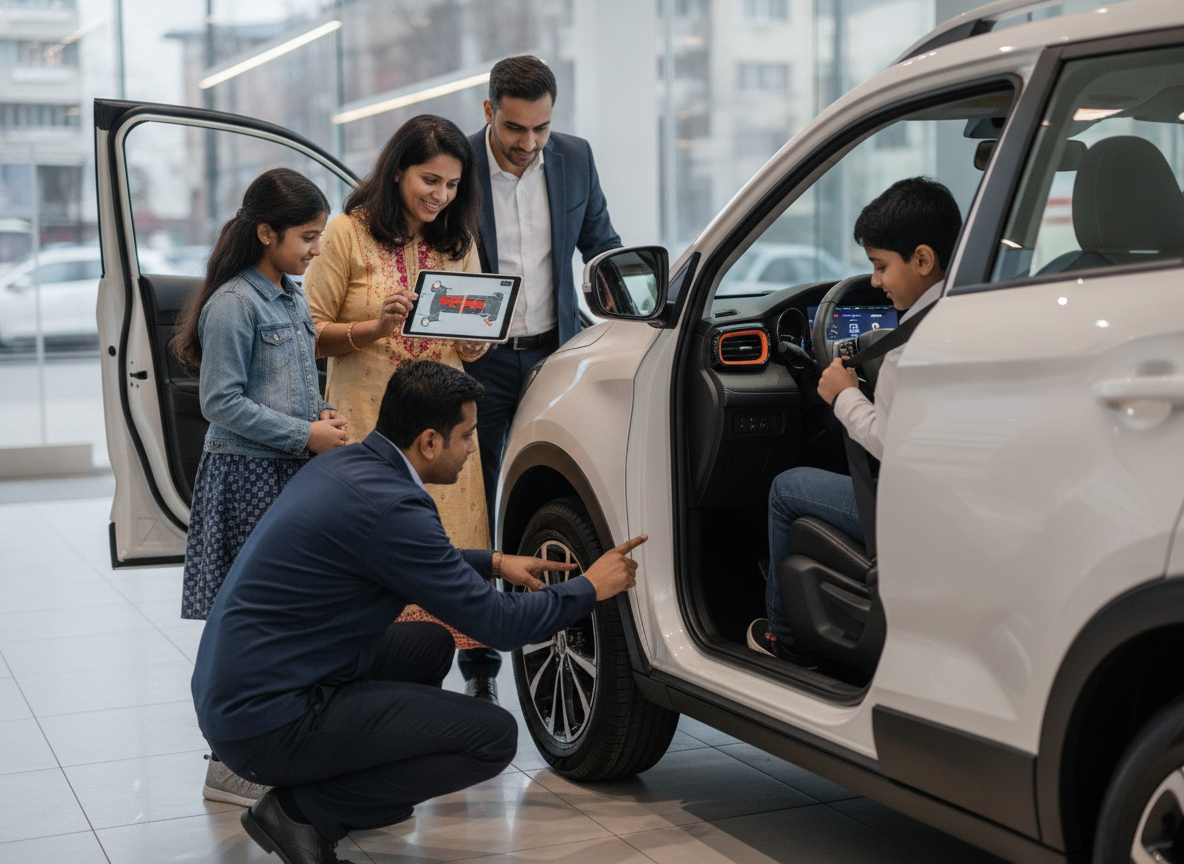
Drive more than one contender on roads that resemble your commute. Test the low-speed clutch or accelerator response, steering weight, ride over broken surfaces, highway stability, braking, cabin noise and air-conditioning performance. Sit in the rear seat, load the boot and check whether child seats or luggage fit. A brochure cannot reveal whether the driving position will still feel comfortable after two hours.
Protect the ownership experience
Compare service intervals, labour rates, parts availability and the dealer’s reputation in your area. Insurance should be compared independently; useful add-ons may include zero depreciation, roadside assistance and engine protection, depending on the vehicle and your risk profile. Read the warranty exclusions carefully, especially for connected technology and EV batteries.
Use this pre-delivery inspection checklist
Before accepting delivery, inspect the car in daylight and match its VIN and engine details with the paperwork. Check the paint and panels for damage, tyre condition and date codes, odometer reading, lights, wipers, infotainment, air-conditioning, cameras, toolkit, spare wheel and every accessory listed on the invoice. Look under the bonnet for leaks and take a short drive if the dealer permits it. Record issues in writing and ask for a resolution before signing the final acceptance.
The simple 2026 decision rule
Choose the car that fits your budget, usage and safety priorities with the fewest compromises—not the one with the longest feature list. Shortlist three cars, calculate their five-year ownership cost, test-drive all three and complete a disciplined inspection. Taking one extra weekend to compare can save years of expensive regret.
Research note: This guide reflects themes appearing in current Indian car-buying search results, including budgeting for on-road costs, evaluating EVs and hybrids, prioritising safety ratings, comparing running costs and completing a pre-delivery inspection. Prices, taxes, incentives and model specifications vary by state and change over time—confirm current details with the manufacturer, insurer and local RTO before purchase.
Related reading: Follow Carpinch.in for practical guides on cars, bikes, maintenance and smarter automotive ownership.