India Electric Two-Wheeler Market September 2026: Why TVS, Bajaj and Vida Are Gaining Share

India’s electric two-wheeler market is no longer a simple contest between start-ups and legacy manufacturers. Vahan registrations through September 28, 2026 show TVS Motor, Bajaj Auto and Hero MotoCorp-backed Vida together accounting for 61.8% of the segment, according to Moneycontrol’s report of the data. For buyers, the shift is a reminder to compare the ownership experience—not just a scooter’s claimed range or introductory price.
Important data note: the figures in this article are a partial-month snapshot through September 28, not final full-month registrations. Registration totals and shares can change with late reporting. The source reported 1.88 lakh electric two-wheeler registrations through that date, already above the 1.83 lakh recorded in all of August.
What the September snapshot says
TVS held a 26.4% share through September 28, followed by Bajaj at 23.6% and Vida at 11.7%. The same report listed September registrations of 49,677 for TVS, 44,480 for Bajaj, 27,690 for Ather, 22,109 for Vida and 11,984 for Ola Electric. These are source-reported month-to-date figures; they should not be mistaken for a final audited league table.
The combined share of TVS, Bajaj and Vida was 59.5% in August and 60.6% in July, before reaching 61.8% in the September-to-date count. Meanwhile, the report put Ola Electric at 6.4% of registrations through September 28, down from 7.6% in August. The direction suggests established two-wheeler makers are converting their dealership, manufacturing and service reach into meaningful EV volume, while competition remains broad and unsettled.
Why established brands are gaining ground
An electric scooter is a service relationship as much as a vehicle purchase. Buyers need a convenient place to ask questions, get routine repairs and resolve a battery or software issue. Manufacturers with existing two-wheeler dealer and service networks may have an advantage in reassuring customers who are making their first switch from petrol.
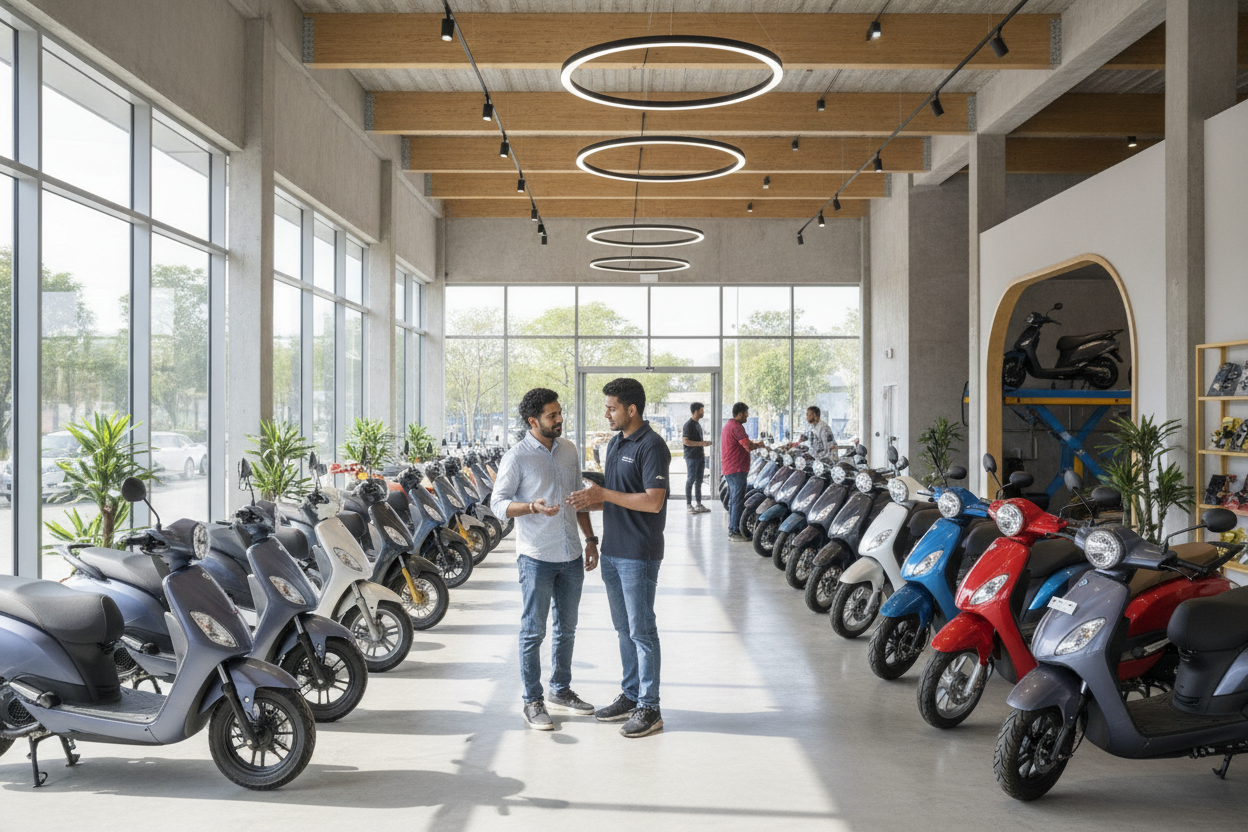
That does not mean a large registration share automatically makes one model the best choice. Dealer quality varies by city, and buyers should confirm whether a showroom also handles repairs, parts and warranty claims. They should also check the nearest service location rather than assuming every outlet offers the same support.
A practical electric scooter checklist for buyers
- Test your daily route: consider your usual distance, traffic, passenger use and hills. Treat the advertised range as a claim to investigate, not a guaranteed everyday result.
- Check charging at home: ask what electrical setup is required, whether installation is included, and how you will charge if you live in an apartment or park outdoors.
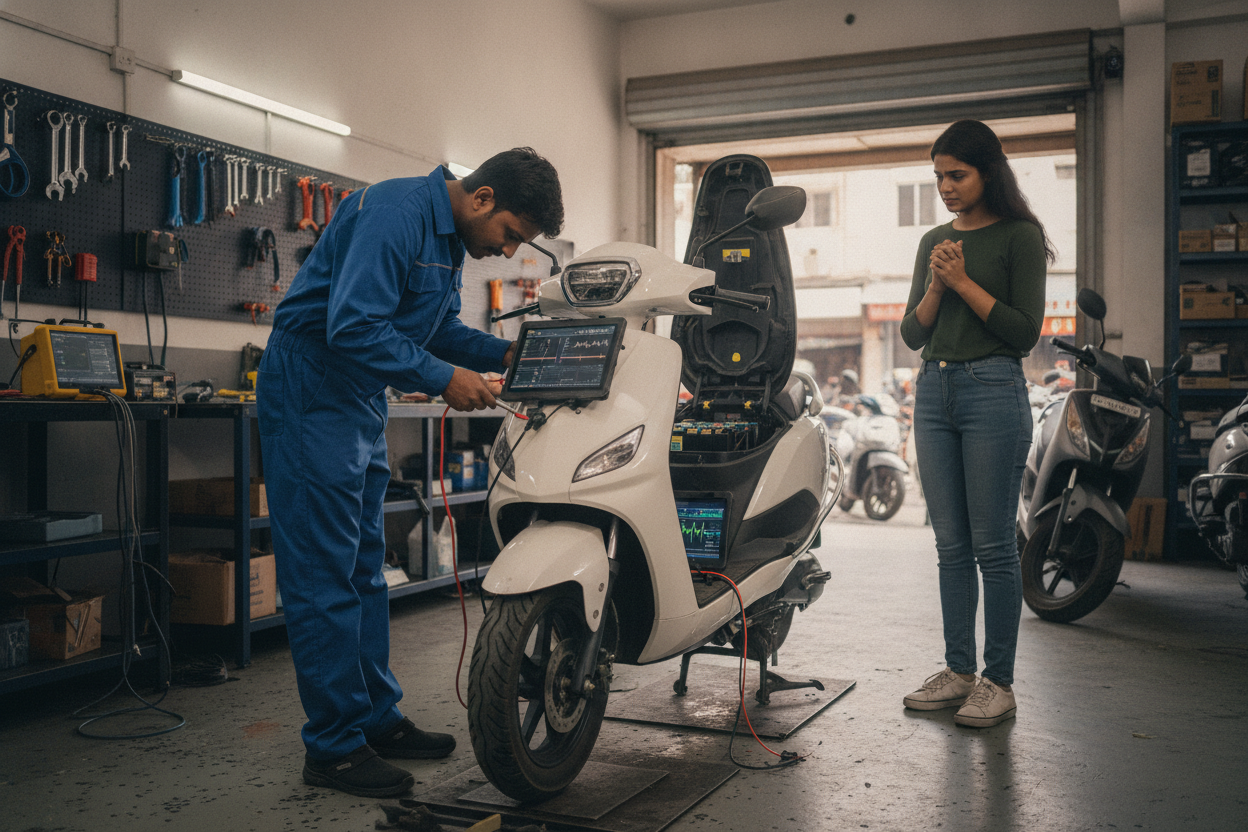
- Map service support: locate the workshop that will actually handle your scooter, ask about appointment access and parts availability, and read the warranty exclusions carefully.
- Compare the full cost: include insurance, charger or installation costs, financing, periodic service and any battery-related terms—not only the ex-showroom price.
- Take a proper test ride: assess low-speed control, braking, pillion comfort, storage, seat height and the scooter’s behaviour on the roads you use.
What to watch in the next registration update
The final September count will show whether the three established players held their combined share after the last two days of the month. It will also help clarify whether individual brands sustained their month-to-date pace. Ather’s Konarc entered sales late in September, so the impact of that launch is more likely to become visible in subsequent registration data than in a short initial window.
For shoppers, monthly rankings are useful context, not a substitute for local research. A popular brand can still have a weak service experience in a particular neighbourhood, while a smaller maker may be a better fit if its workshop is nearby and the product suits your commute. Use sales momentum to shortlist brands, then validate support, charging and real-world usability before paying a booking amount.
Bottom line
The September-to-date data points to a stronger position for established manufacturers in India’s electric two-wheeler market: TVS, Bajaj and Vida together represented 61.8% of registrations through September 28, based on the figures reported by Moneycontrol from Vahan. The market is still competitive, and the partial-month numbers are not the final word. For buyers, the clearest takeaway is to weigh dependable local service and charging practicality alongside price, features and claimed range.
Related reading: what electric scooter buyers should check in the PM E-DRIVE FY27 update and our Ather Konarc launch guide.
Source: Moneycontrol, “TVS, Bajaj, Vida close in on two-thirds of India’s electric two-wheeler market in September,” September 29, 2026, reporting Vahan registrations through September 28. Figures may be revised as late registrations are recorded.