


Festive-season deliveries can be exciting—and busy showroom days can make it tempting to sign quickly and drive away. Take a little time to inspect the exact car assigned to you before completing the handover. This practical pre-delivery inspection (PDI) guide helps you check condition, identification, controls and paperwork without turning the visit into a technical teardown.
What a pre-delivery inspection can—and cannot—do
A PDI is a careful walk-around and basic function check of the vehicle you are about to accept. It can help you notice visible damage, mismatched details or equipment that needs attention. It is not a substitute for a mechanic’s diagnosis, a roadworthiness certificate or the manufacturer’s warranty. Ask the dealer to explain any concern and record agreed fixes in writing before you sign acceptance documents.
1. Set up the inspection before signing
- Request to inspect the specific vehicle allocated to your booking, in good light and before final acceptance.
- Keep your booking confirmation, invoice or order details handy so you can compare the model, variant, colour and accessories.
- Bring a phone for photographs and a torch for shaded areas. If you want a professional assessment, ask the dealer in advance whether your mechanic can attend.
- Allow enough time to check calmly. If the delivery bay is crowded or dim, ask whether the car can be moved to a better-lit area.
2. Match the car to your order
Start with identity rather than accessories. Compare the vehicle identification number (VIN) shown on the vehicle with the number printed on the dealer’s documents. Check that the model, variant, colour and any factory-fitted options correspond to your order. Ask the dealer to point out the manufacturing-date information and explain where it appears on that model; formats and locations can vary by manufacturer. If a number or specification does not match, pause and get clarification in writing before signing.
3. Walk around the exterior in daylight
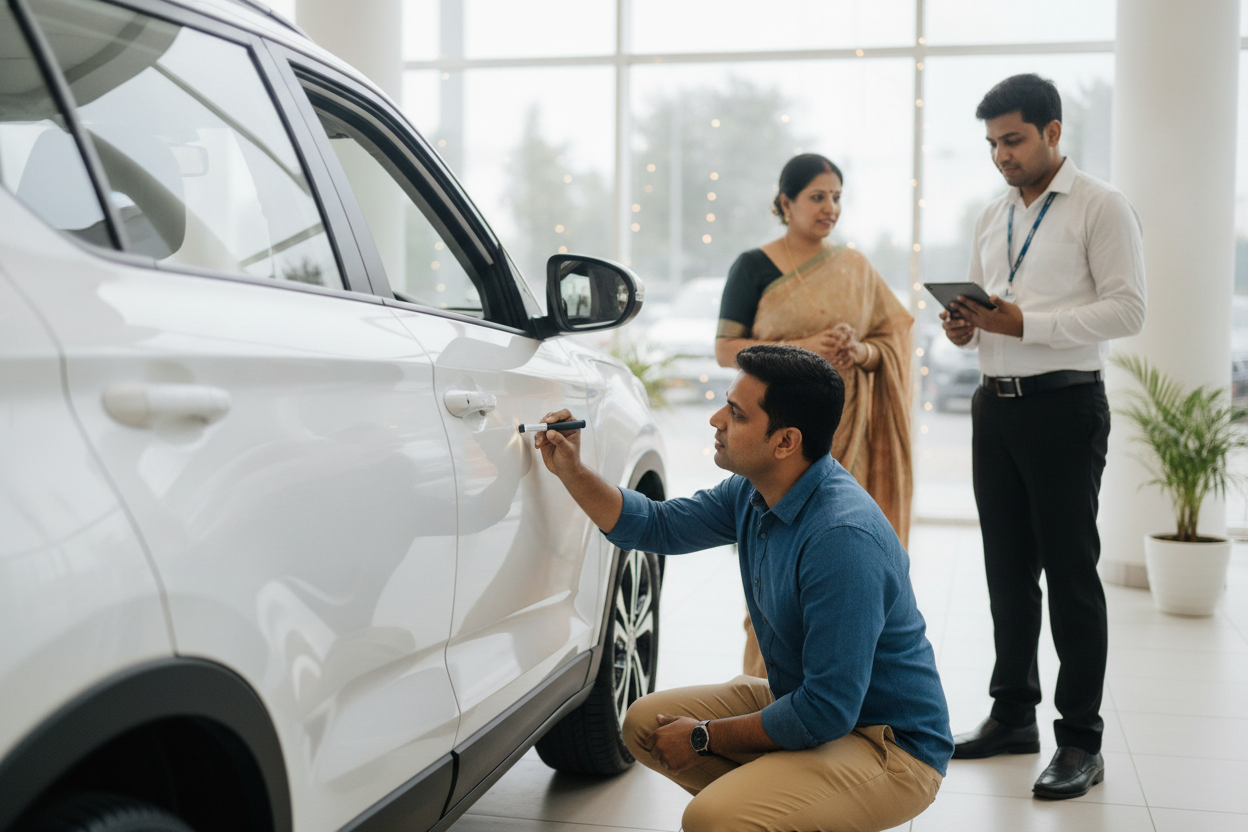
Look at each panel from more than one angle. Check for scratches, dents, paint differences, uneven-looking panel gaps, chipped glass and marks on the wheels. Inspect the roof and lower body where lighting can hide damage. Open and close each door, the boot and the bonnet if the dealer permits. Ask staff to demonstrate the exterior lights, indicators and wipers. Photograph anything you want the dealer to review, and note its location clearly.
4. Check the cabin and basic equipment
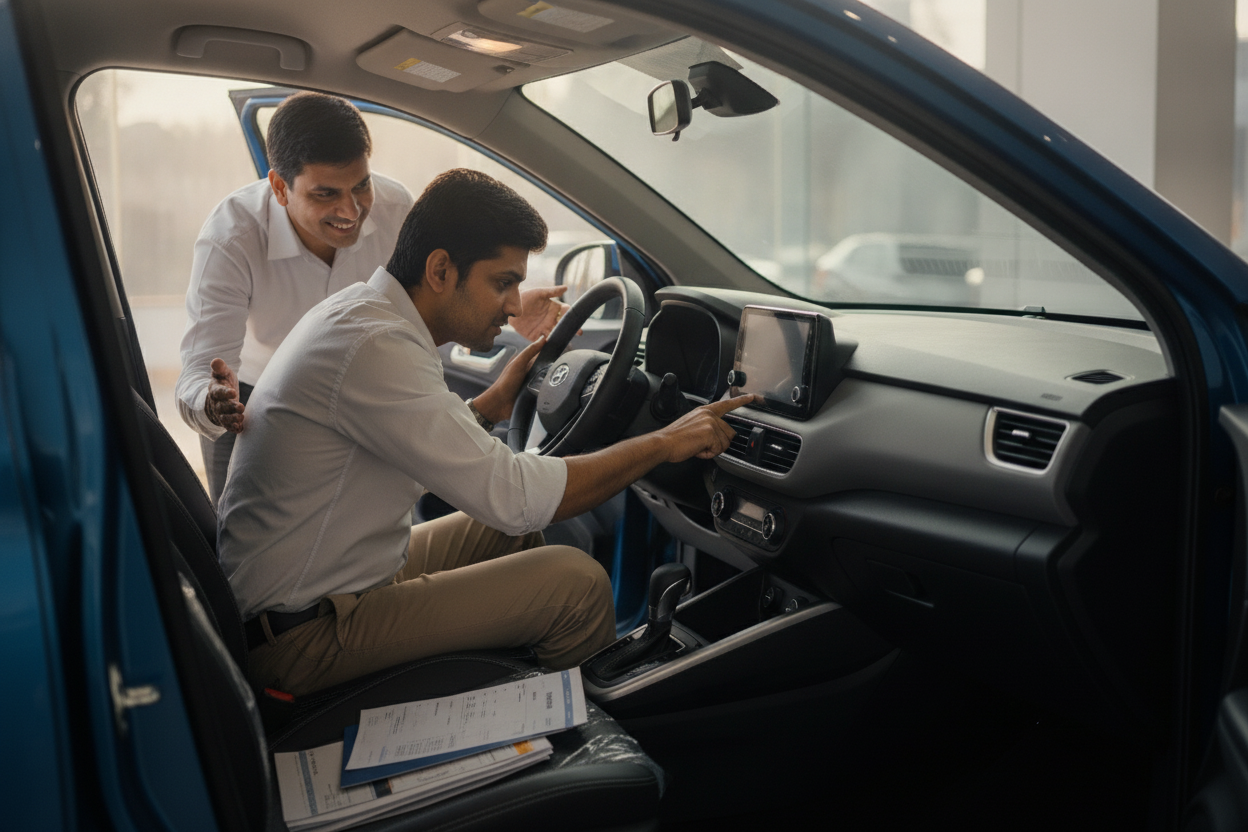
With permission, sit in every seating row and look for stains, tears or scuffs. Test seat adjustment, seatbelts, windows, mirrors, central locking and the air-conditioning. Switch on the infotainment system and check the functions you expect to use, such as audio, USB ports and phone connectivity, where equipped. Ask the staff to demonstrate cameras, sensors or driver-assistance features included in your specific variant. Confirm that warning lamps behave as described in the owner’s manual; do not try to diagnose a warning light yourself.
5. Review tyres, wheels and visible under-bonnet items
Check all visible tyre sidewalls for cuts, bulges or obvious damage, and confirm the spare or puncture-repair kit supplied for that model is present. Ask the dealer to show you the recommended tyre-pressure information and how to use the supplied mobility equipment. If you are comfortable doing so and the vehicle is parked safely, look for obvious fluid drips under the car and ask staff to explain any unfamiliar smell or sound. Leave technical checks and any inspection requiring tools to a qualified technician.
6. Confirm documents, keys and promised accessories
Review the paperwork supplied for your purchase and registration, including the invoice, insurance details and the applicable sale and roadworthiness documents. Names, vehicle details and identifiers should be consistent across the records. Check that the owner’s manual, warranty information, service details and the number of keys promised are handed over. Match paid accessories against the invoice or written order, and ask the dealership to list anything pending along with a completion date.
7. Make a clear record of anything unresolved
If you find damage, a missing item or a document discrepancy, show it to the delivery representative and request a written note describing the issue, the agreed next step and who will follow up. Keep copies of photographs and messages. Do not rely on a verbal promise alone. For a serious safety concern or a mismatch you cannot resolve, pause the handover and contact the dealership’s manager or the manufacturer’s customer-care channel for guidance.
A simple handover-day checklist
- Vehicle identity, variant, colour and order details match.
- Exterior panels, glass and wheels checked in good light.
- Cabin, seatbelts, air-conditioning and key controls demonstrated.
- Tyres and supplied spare or repair kit visually checked.
- Invoice, insurance and applicable vehicle documents reviewed.
- Keys and invoiced accessories accounted for.
- Any open issue recorded in writing before acceptance.
Frequently asked questions
Should I inspect the car before or after registration?
Ask the dealer to arrange your inspection before you complete the handover and sign acceptance documents. Registration processes differ, so confirm the sequence and your options directly with the dealership before making a payment or signing.
What if I notice a scratch or missing accessory?
Photograph the concern and ask the delivery representative to record it, the proposed remedy and a timeline in writing. If the issue is significant or safety-related, pause acceptance while you seek clarification from the dealership or manufacturer.
Do I need a mechanic for a new-car inspection?
A buyer can carry out a visual walk-around and test ordinary controls, while a qualified mechanic can provide a more technical assessment if you want one. Ask the dealer in advance about access and any inspection arrangements. Avoid opening or operating components you are not trained to handle.
Is a short test drive part of every delivery inspection?
Not every dealership or delivery process includes a customer test drive at handover. Ask whether one is available and follow the dealer’s safety and insurance requirements. If a drive is not possible, request a demonstration of the relevant basic functions and raise any concern before leaving.
A measured handover is better than a rushed one. Check the car you are receiving, ask questions whenever something is unclear, and keep a written record of what the dealership agrees to do.